
Nina Johansen
Forsker
Forfattere
Wiktoria Kaczmarek-Derda Trygve S. Aamlid Ingerd Skow Hofgaard Tatsiana Espevig Khaled Murad Agha Anette Sundbye Zahra Bitarafan Kirsten Tørresen Heidi Udnes Aamot Andrea Ficke Gunda Thöming Annette Folkedal Schjøll Håvard Eikemo Anne Muola Therese With Berge Belachew Asalf Tadesse Jorunn Børve Arne Stensvand Nina Trandem Gunnhild Jaastad Bjørn Arild Hatteland Katherine Ann Gredvig Nielsen Nina Johansen Charles Kwadha Inger Sundheim Fløistad Martin Pettersson Zhibo Hamborg Carl Jonas Jorge Spetz Dag-Ragnar Blystad Özgün Candan Onarman Umu Marit Skuterud Vennatrø Jan Philip Øyen Solveig Haukeland Tor-Einar Skog Roger Holten Anne Straumfors Valborg Kvakkestad Line Ulberg Tveiten Ingrid FlatlandSammendrag
I Jordbruksoppgjøret 2025 (Prp. 149 S (2024 – 2025)) ble det enighet om at kunnskapsstatus og -behov innen plantehelseområdet fra 2019 måtte oppdateres. Det er gjort i form av denne rapporten. Den bestilte utredningen er avgrenset til skadegjørere og planteverntiltak som er relevante for jord- og hagebruk. Utredingen tar for seg kunnskap, prosjekter og kunnskapshull siden 2019 og fram til i dag (2026). Kapittel 1 omtaler metodebruk og plantevern i et beredskapsperspektiv. Kapittel 2.1-2.8 omhandler status for utfordringer med skadegjørere og tilgang til planteverntiltak for alle aktuelle plantekulturer for ugras, skadedyr og sopp. Kapittel 2.9 gir en oversikt over godkjente og utgåtte plantevernmidler siden 2019. Kapittel 2.10 omhandler skadegjørere hvor kjemiske plantevernmidler er i begrenset bruk. Det vil si virus, bakterier og nematoder. Kapittel 3 tar for seg ny teknologi og innovative metoder for integrert plantevern og faktorer som påvirker bruken av disse. Kapittel 4 omhandler miljø- og helseeffekter knyttet til bruk av kjemiske plantevernmidler, hvilke plantekulturer som utgjør størst risiko for negative miljøeffekter og faktorer som reduserer helserisikoen. Kapittel 5 tar for seg næringens behov og utviklingstrekk knyttet til kunnskap, rådgivning og tiltak. Dette kapittelet ser også på årsaker til eventuelle endringer i bruk av og behov for plantevernmidler som følge av for eksempel miljøkrav.
Forfattere
Terje Christensen Are Røysamb Ulrike Bayr Dieu Tien Bui Guðrún Helgadóttir Nina Johansen Joern Klein Mieke Cornelia Louwe Randi Mork Kyung Binn Noh Stefanie Reinhardt Trude Eid Robsahm Kristin Helen Roll Øyvind Steifetten Per Strömberg Gry Tengmark Østenstad Veronika ZaikinaSammendrag
Abstract Energy-efficient lighting solutions, while beneficial for reducing energy consumption, also pose challenges in terms of light pollution. Light pollution, defined as excessive or misdirected artificial light, has become a significant environmental issue globally. This perspective paper explores the extent, effects, and knowledge gaps related to light pollution, with a focus on its impact on human health, ecosystems, and energy consumption. This study focuses on Norway, a country that is particularly relevant for studying light pollution due to its far northern location. At high latitudes, the variation in natural light is larger over the year than at lower latitudes. Therefore, a Nordic perspective is valuable to present knowledge about effects of artificial lighting under these conditions. Under the midnight sun, minimal additional outdoor lighting is required, whereas during the winter season, outdoor lighting may be utilised continuously. The paper synthesizes findings from various studies, highlighting the rapid increase in light pollution due to urbanisation, infrastructure development, and the widespread adoption of LED technology. Human health effects include alterations of circadian rhythms, increased risk of accidents, and potential links to serious diseases such as cancer. Ecosystem impacts are profound, affecting a number of species i.e., within insects and bats, and may lead to for instance disturbances in navigation and circadian rhythms, habitat fragmentation, and altered predator–prey dynamics. This article identifies significant knowledge gaps, particularly in the measurement of light pollution, understanding its health effects, and its impact on various species. Recommendations for future research and policy development are provided, emphasising the need for interdisciplinary approaches to mitigate the adverse effects of light pollution and promote sustainable lighting practices.
Forfattere
Nina Johansen Hans Geir Eiken Simeon Rossmann May Bente Brurberg Monica Skogen Marta Bosque Fajardo Borghild Glorvigen Toril Eklo Finn-Arne Haugen Snorre Hagen Erik LysøeSammendrag
Several aphid species pose serious treats to potato crops by causing direct damage to the plants and/or indirectly by transmitting viruses. Different morphological forms and phenotypic plasticity among aphids complicates taxonomy and identification and thus makes targeted pest management in potatoes challenging. To obtain an overview of aphids frequenting potato fields in Norway, we investigated seasonal and annual changes in aphid populations in five potato fields (58–64 °N) over a three-year period (2016–2018), using yellow pan traps. In total 2218 of the 6136 collected aphids were identified by traditional barcoding, meaning sequencing a ~ 650 fragment of the mitochondrial COI gene. This revealed 137 different species, of which 111 were identified at the species level. The remaining were identified only to the genus level, indicating potential novel species. The southernmost sampling location yielded the highest number of species and individual counts, although no clear correlations to climate factors (temperature/precipitation) was observed. Of the 111 species identified, at least 39 are potential vectors of potato virus Y (PVY) and nine species may also transmit potato virus A (PVA). Knowledge on virus vector and non-vector aphid abundance and phenology have the potential to improve pest management of potato cultivation.
Divisjon for kart og statistikk
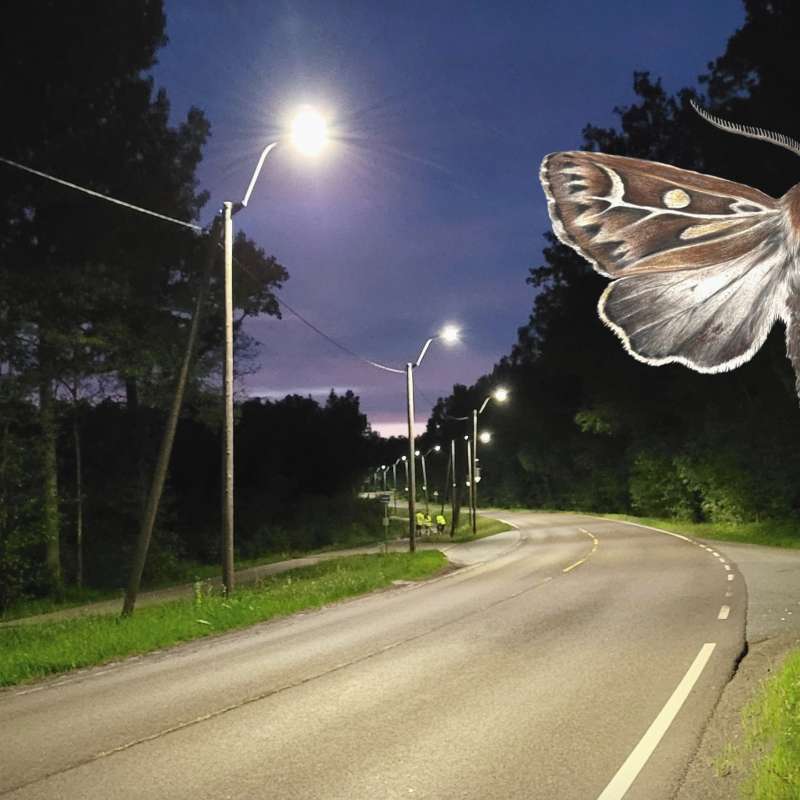
Lysmiljø: Vegbelysningens effekter på insekter
Prosjektet er et tverrfaglig samarbeid mellom NIBIO, Universitetet i Sørøst-Norge (USN), Statens vegvesen og Vestfold og Telemark fylkeskommune. Målet er å øke kunnskapen om hvordan kunstig nattlys – spesielt vegbelysning – påvirker flyvende insekter.
Divisjon for bioteknologi og plantehelse
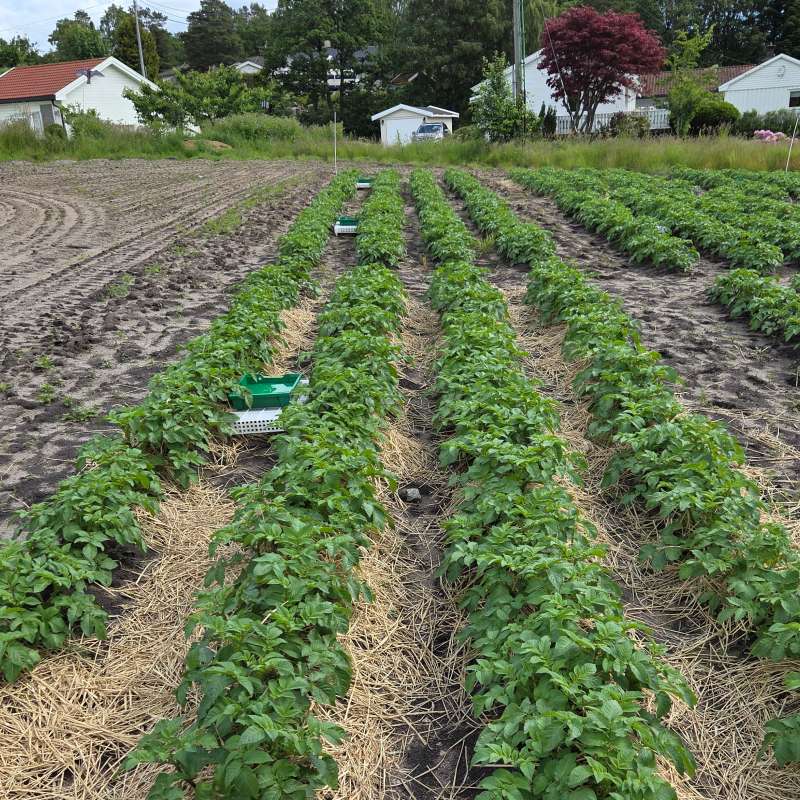
Effekt av halmdekke på plantevekst, potetkvalitet og bruk av plantevernmidler i settepoteter
Kan halmdekke redusere virusangrep og samtidig bidra til mer bærekraftig settepotetproduksjon? NIBIO undersøker hvordan halmdekke påvirker bladlus, virussmitte, avling og kvalitet i norske settepotetfelt gjennom et treårig prosjekt i Agder og Solør.
Divisjon for bioteknologi og plantehelse
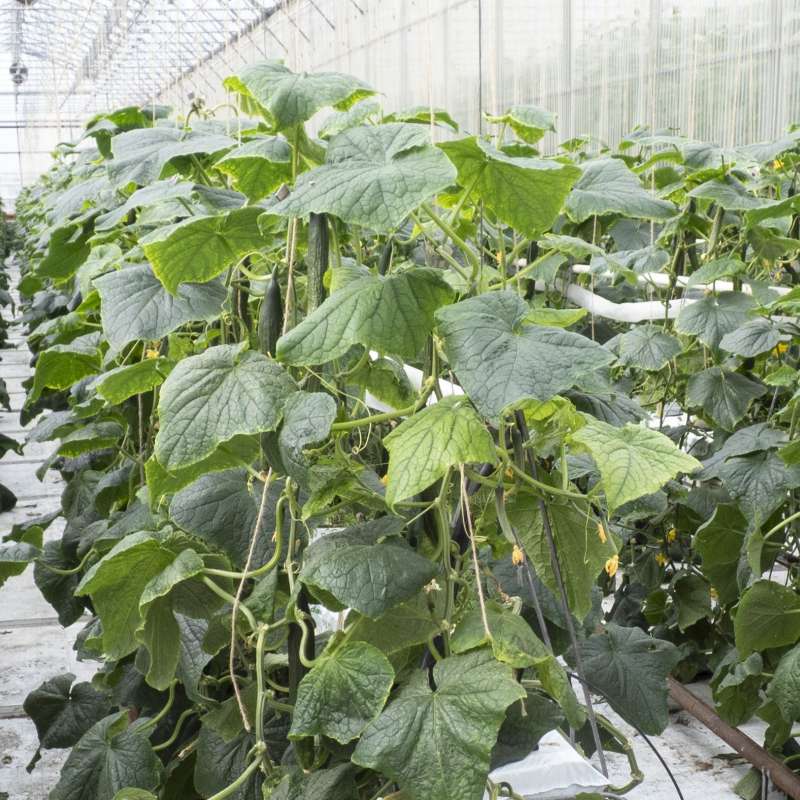
FriskAgurk: Bærekraftig plantehelse i moderne veksthusagurkproduksjon
FriskAgurk-prosjektet har som hovedmål å finne løsninger for plantehelserelaterte utfordringer som oppstår i forbindelse med moderne veksthusproduksjon av agurk i Norge.
Divisjon for bioteknologi og plantehelse
HealthyCucumber: Sustainable plant health management in modern greenhouse cucumber production
The HealthyCucumber project aims to find plant health solutions for challenges related to modern greenhouse production of cucumber in Norway.