
Arne Stensvand
Seniorforsker
Sammendrag
Det er ikke registrert sammendrag
Sammendrag
Background The soil-borne oomycete Phytophthora cactorum causes crown rot, a major disease of the allo-octoploid strawberry (Fragaria × ananassa Duch., 2n = 8× = 56) that limits cultivation worldwide. Resistance to P. cactorum is a highly desirable trait but is typically quantitative and moderately heritable. A better understanding of the genetic basis of resistance to crown rot is essential for developing durable crown rot-resistant cultivars. Results We conducted a genome-wide association study (GWAS) using multi-locus models on 100 wild strawberry accessions from South and North America. The accessions were genotyped using the Axiom™ 50 K strawberry SNP array and mapped to the F. × ananassa cv. Royal Royce v. 1.0 reference genome. Testing for resistance to P. cactorum revealed a wide range of phenotypes. A single genetic marker, AX-184528282, located on chromosome 7B, was strongly associated with resistance to P. cactorum and explained 53% of the observed phenotypic variation. This marker was present in several highly resistant exotic Fragaria accessions that represent potential donors for introgression of favorable alleles into modern strawberry cultivars. In addition, several strong candidate resistance genes were identified within the 2 Mb genomic region surrounding the significant marker. Conclusions This study advances understanding of resistance to P. cactorum in strawberry and identifies genetic resources that can accelerate the development of crown rot-resistant cultivars through marker-assisted breeding.
Sammendrag
Det er ikke registrert sammendrag
Divisjon for matproduksjon og samfunn
Innovativ og bærekraftig produksjon av Ribes i hele Norge-RibesMax
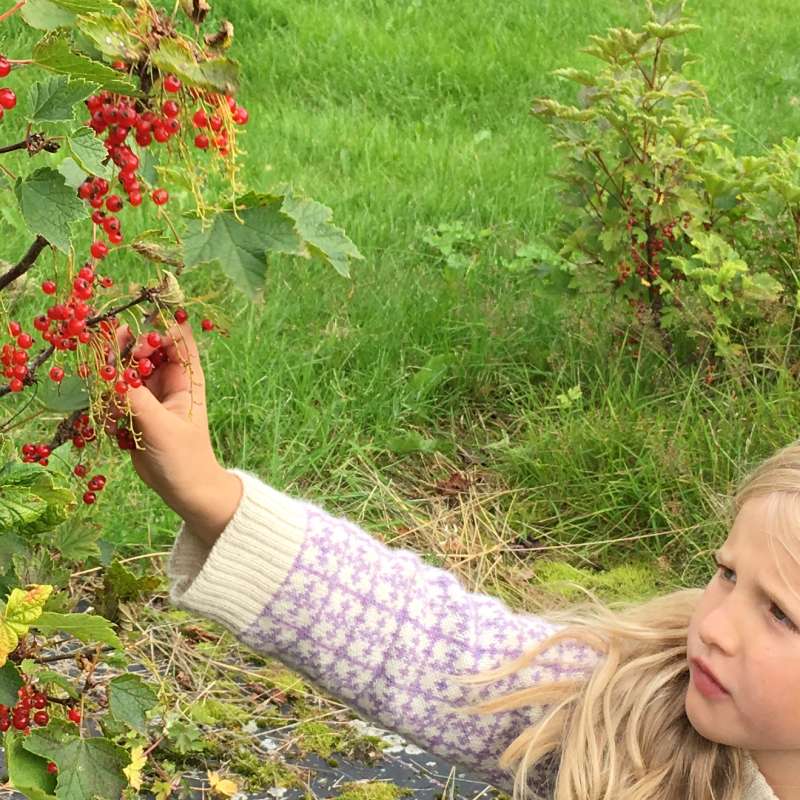
Solbær, stikkelsbær og rips, som alle hører til slekten Ribes, har på tross av sine lange tradisjoner og påviste positive helseeffekter hatt en negativ trend i norsk produksjonsvolum. I dag dekker den norske Ribes-produksjonen bare en femtedel av markedets behov. Det er derfor et stort potensial for økt norsk produksjon av disse artene. De dyrkes i dag hovedsakelig til industri-formål (saft, syltetøy og gelé), men det er også en økt interesse for produksjon til friskkonsum (dyrking i hekk eller espalier). Nye mat- og helsetrender gir mulighet for nye produkter basert på Ribes. I RibesMax ønsker vi å bruke erfaringer fra sidereventyret i Hardanger til å teste Ribes som råvare for drikker med og uten alkohol. RibesMax vil sette søkelys på utfordringer og muligheter for økt produksjon og økt verdiskapning, og prosjektet vil gi næringen et løft, ved å involvere hele verdikjeden.
Divisjon for bioteknologi og plantehelse
IPM-Fruit: IPM strategier for framtidens fruktproduksjon
I IPM fruit skal undersøke hvordan man kan bruke preventive og alternative tiltak for å oppnå et mer bærekraftig plantevern i frukt. Prosjektet legger opp til å undersøke både naturlige fiender i og utenfor frukthager, fysiske tiltak som preventive tiltak, biologiske plantevernmidler og hvordan best kombinere ulike tiltak under norske forhold. Prosjektet vil bli utført i samarbeid med NMBU, NLR, NIAB East Malling (UK), IRTA (Spania) og i nært samarbeid med fruktnæringen.
Divisjon for matproduksjon og samfunn
JordbærSmak: En optimalisert moderne produksjonsteknologi for mer smakfulle norske jordbær
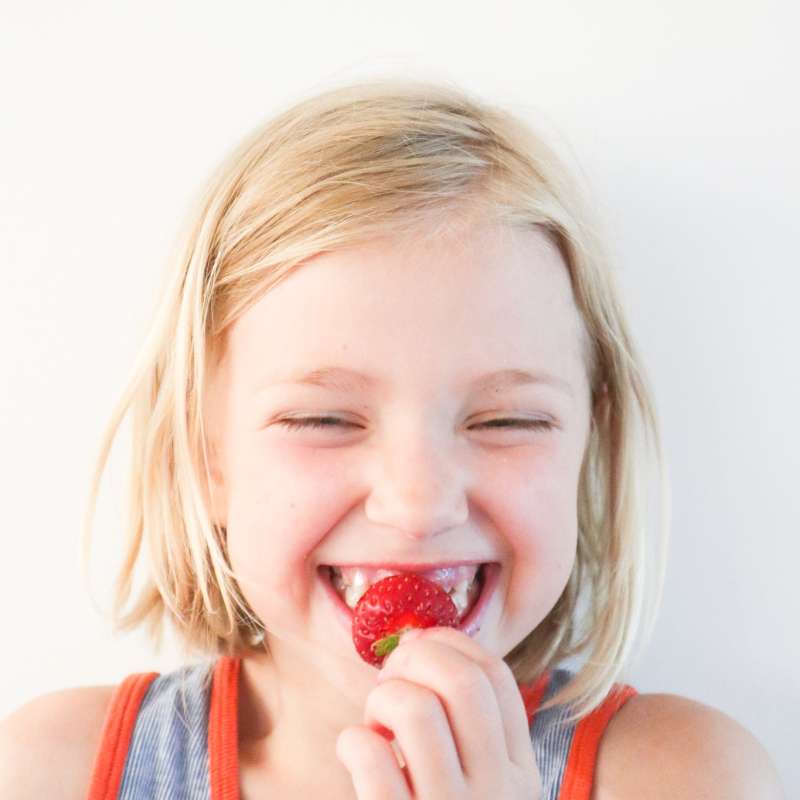
Det er et mål å øke produksjonen i den norske grøntsektoren, inkludert jordbær, med inntil 50 prosent de kommende 15 årene. For å oppnå dette må dyrkingssesongen utvides, men da trengs en mye bedre kunnskap om hvordan man kan påvirke planteveksten og ta i bruk teknologi for å overvåke og beskytte plantene, uten at det går utover kvalitet og smak.
Divisjon for bioteknologi og plantehelse
IPM-fruit: IPM strategies for future fruit production
IPM fruit will investigate how preventive and alternative control measures can be used for sustainable fruit production. The project will study how natural enemies, physical control, and biologicals as well as combinations of these can be best applied under Norwegian conditions. The project will be carried out in collaboration with the Norwegian University of Life Sciences (NMBU), the Norwegian advisory service (NLR), NIAB East Malling (UK), IRTA (Sapin), and also in close collaboration with fruit growers.