
Gunda Thöming
Research Scientist
Authors
Marie Vestergaard Henriksen Annette Bär Ulrike Bayr Magda Karlo Bjørn Arild Hatteland Anne Muola Line Johansen Steffen Adler Emilie Risdal Danielsen Therese Birkeland Fossøy Gunda ThömingAbstract
Et bærekraftig jordbruk må bevare naturens evne til å levere økosystemtjenester. Samtidig har en rekke studier dokumentert en global nedgang i insektbestander, noe som truer viktige økosystemtjenester som insektpollinering og biologisk kontroll av skadedyr med naturlige fiender. I Norge er det insekter som bier, fluer, marihøner, gulløyer og snyltevepser som bidrar med disse økosystemtjenestene. Det nye rammeverket Integrert plante- og pollinatorvern (IPPV) har som målsetting å samordne tiltak som styrker både biologisk kontroll av skadedyr med naturlige fiender og insektpollinering i matproduksjonen. I IPPV iverksettes det forebyggende tiltak som over tid øker mangfoldet av ressurser for ulike typer av insekter i kulturlandskapet med mål om å gi en mer stabil levering av økosystemtjenester til produksjonen i åkeren. I denne rapporten vurderer vi relevansen av IPPV rammeverket for norske matproduksjonssystemer og undersøker hvordan eksisterende tiltak og kartlag kan utnyttes i implementeringen av IPPV i norsk jordbruksforvaltning. Vi gir noen anbefalinger til hvordan rammeverket og konkrete tiltak kan iverksettes i norsk jordbruk. Den helhetlige tilnærmingen IPPV har for å sikre økosystemer og arter er viktig for jordbrukets bærekraft og matsikkerheten.
Authors
Wiktoria Kaczmarek-Derda Trygve S. Aamlid Ingerd Skow Hofgaard Tatsiana Espevig Khaled Murad Agha Anette Sundbye Zahra Bitarafan Kirsten Tørresen Heidi Udnes Aamot Andrea Ficke Gunda Thöming Annette Folkedal Schjøll Håvard Eikemo Anne Muola Therese With Berge Belachew Asalf Tadesse Jorunn Børve Arne Stensvand Nina Trandem Gunnhild Jaastad Bjørn Arild Hatteland Katherine Ann Gredvig Nielsen Nina Johansen Charles Kwadha Inger Sundheim Fløistad Martin Pettersson Zhibo Hamborg Carl Jonas Jorge Spetz Dag-Ragnar Blystad Özgün Candan Onarman Umu Marit Skuterud Vennatrø Jan Philip Øyen Solveig Haukeland Tor-Einar Skog Roger Holten Anne Straumfors Valborg Kvakkestad Line Ulberg Tveiten Ingrid FlatlandAbstract
I Jordbruksoppgjøret 2025 (Prp. 149 S (2024 – 2025)) ble det enighet om at kunnskapsstatus og -behov innen plantehelseområdet fra 2019 måtte oppdateres. Det er gjort i form av denne rapporten. Den bestilte utredningen er avgrenset til skadegjørere og planteverntiltak som er relevante for jord- og hagebruk. Utredingen tar for seg kunnskap, prosjekter og kunnskapshull siden 2019 og fram til i dag (2026). Kapittel 1 omtaler metodebruk og plantevern i et beredskapsperspektiv. Kapittel 2.1-2.8 omhandler status for utfordringer med skadegjørere og tilgang til planteverntiltak for alle aktuelle plantekulturer for ugras, skadedyr og sopp. Kapittel 2.9 gir en oversikt over godkjente og utgåtte plantevernmidler siden 2019. Kapittel 2.10 omhandler skadegjørere hvor kjemiske plantevernmidler er i begrenset bruk. Det vil si virus, bakterier og nematoder. Kapittel 3 tar for seg ny teknologi og innovative metoder for integrert plantevern og faktorer som påvirker bruken av disse. Kapittel 4 omhandler miljø- og helseeffekter knyttet til bruk av kjemiske plantevernmidler, hvilke plantekulturer som utgjør størst risiko for negative miljøeffekter og faktorer som reduserer helserisikoen. Kapittel 5 tar for seg næringens behov og utviklingstrekk knyttet til kunnskap, rådgivning og tiltak. Dette kapittelet ser også på årsaker til eventuelle endringer i bruk av og behov for plantevernmidler som følge av for eksempel miljøkrav.
Abstract
No abstract has been registered
Division of Biotechnology and Plant Health
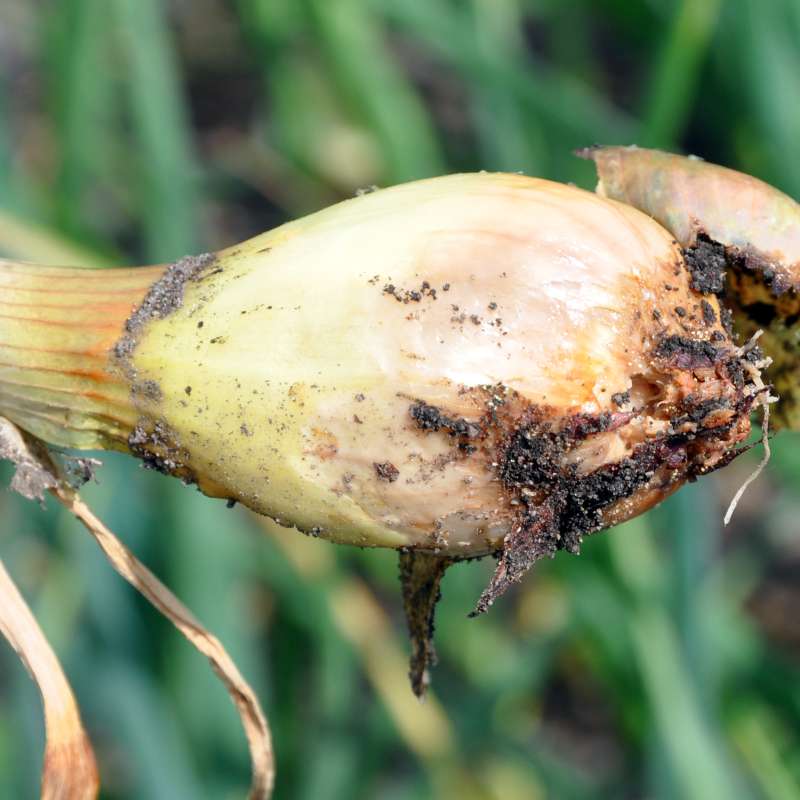
Strategies and methods to manage major pests and diseases of onion (‘QualityOnion’)
Onion fly and Fusarium basal rot represent major threats for sustainable Norwegian onion production. There are substantial gaps in our knowledge regarding these pests such as which Fusarium species infect onions in Norway, what are the main sources of Fusarium inoculum, and how onion fly prevalence is changing through the growing season.
Division of Biotechnology and Plant Health
Plant Pest prevention through technology-guided monitoring and site-specific control
One of the ambitious goals of the Farm2Fork strategy is to reduce the use of pesticides in the EU by 50%. The expected increase in plant pests due to climate change, international trade and the intensification of food production systems offsets this target.