
Tor Myking
Avdelingsleder/forskningssjef
Sammendrag
The value of genetic resources in agriculture is hard to overestimate as they are decisive for food safety, provide options for adaptation of future diet needs, and underpin a vast amount of biodiversity. To enable an effective conservation of these resources, we need knowledge about where they are located. The EU project GenRes Bridge showed that this knowledge is indeed modest at the European level. A source of genetic resources with particular potential for use in agriculture, e.g. related to the future adaptation to climate change, are crop wild relatives (CWR). Crop wild relatives are plant species categorized as wild relatives of cultivated plants and are used here as an indicator of genetic resources in the landscape. We therefore wanted to explore new ways of identifying hotspots of genetic resources, highlighting the landscape as a starting point. It is well established that landscape heterogeneity is closely related to biodiversity, although to our knowledge studies hitherto have rarely looked at the relation between landscape and genetic resources. Focusing on crop wild relatives, used here as an indicator for genetic resources in the landscape, we wanted to assess whether we could identify how landscape variation in topography and land cover has consequences for the spatial distribution of genetic resources that may be important in the future development of agriculture. Here we report the results from this pilot study where we have tested whether there is a correlation between landscape heterogeneity and agricultural genetic resources, using 5 x 5 km grid cells as spatial units. We used the presence of the crop wild relatives (CWR) which are prioritized for conservation in Norway as indicators of agricultural genetic resource diversity and extracted landscape heterogeneity descriptors from publicly available sources. The results from our study do suggest that landscape diversity could be a path worth following in searching for these resources in the landscape, and thus also important in decision-making on planning and management in these diverse landscapes.
Sammendrag
Det er ikke registrert sammendrag
Forfattere
Todora Rogelja Laura Secco Francoise Lefevre Egbert Beuker Marjana Westergren Bruno Fady Santiago C. González-Martínez Tor Myking Luc E. Pâques Christian Rellstab Giuseppe Giovanni Vendramin Thibaud Chauvin Marcela Van Loo Ulla Ovaska Jacopo Giacomoni Anže Japelj Anna-Maria Farsakoglou Heino Konrad Sofia Caiolo Aurore Desgroux D. E. Kjær Jo Van Brusselen Mauro MasieroSammendrag
Kartlegging av sentrale aktører i forvaltningen av trærnes genressurser
Divisjon for skog og utmark
Foryngelse av gran ved planting - ForGran
Svenske og norske undersøkelser viser stor avgang i plantefelt de første årene etter utsetting. Dette innebærer et stort tap både for skogeierne, skognæringen og for samfunnet. Målet med dette prosjektet er å avdekke årsaker til den store avgangen i plantefelt for gran og bruke denne kunnskapen til å gi veiledning om avbøtende tiltak.
Divisjon for skog og utmark
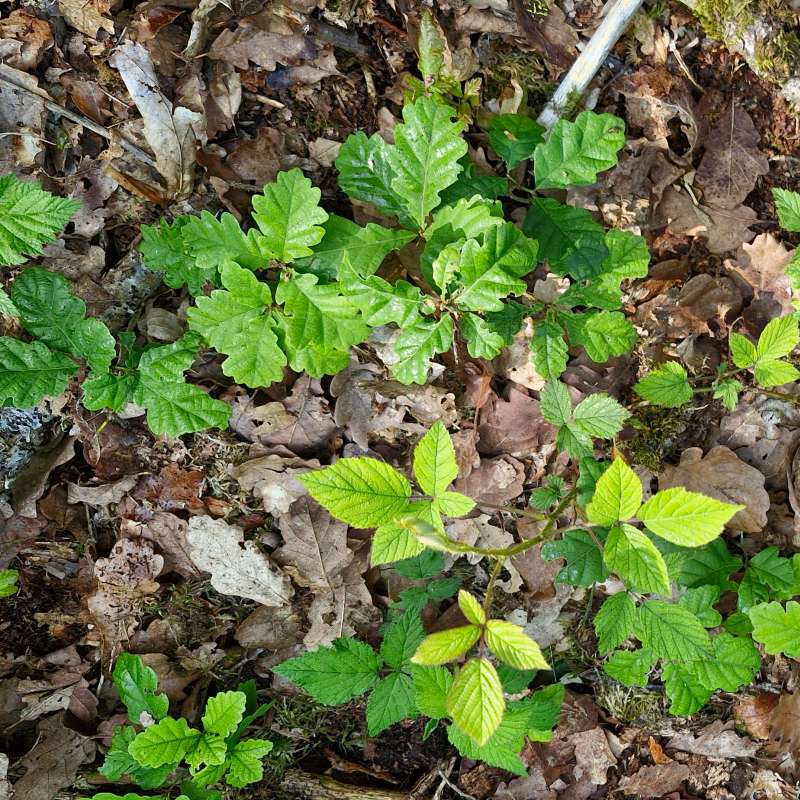
OakBreed: Motorveien til genetisk forbedret eikefrø
OakBreed-prosjektet har som mål å etablere langsiktig foredling av eik i Norge. Fokus er på to hjemmehørende arter: sommereik (
Divisjon for skog og utmark
OptFORESTS - Harnessing forest genetic diversity for increasing options in the face of environmental and societal challenges
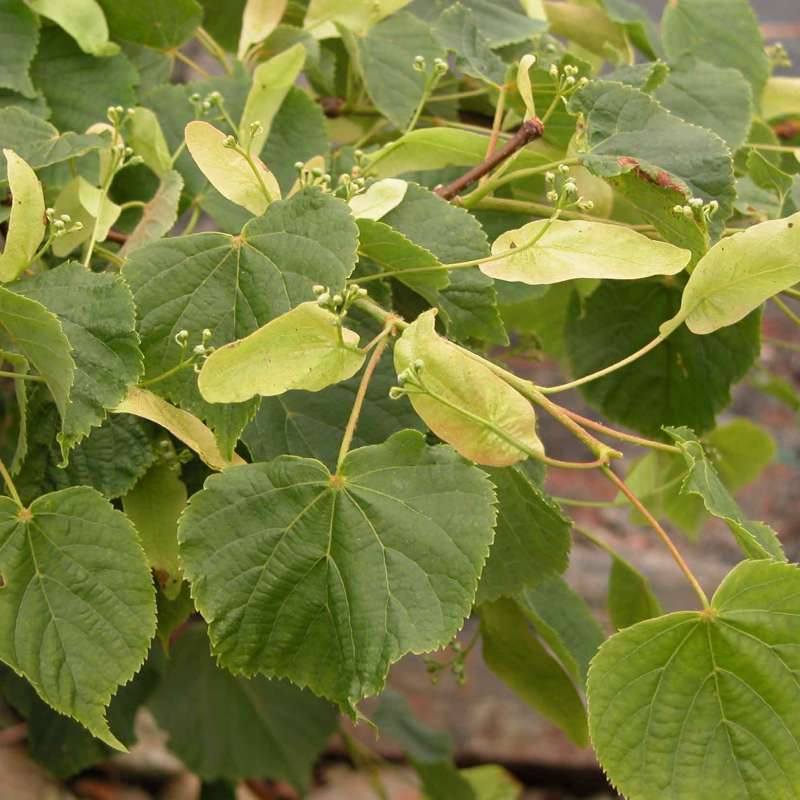
OptFORESTS har som overordnet mål å bidra til bevaring og bruk av skogtregenetiske ressurser i Europa og er en oppfølging av ambisjonen i EUs grønne giv (Green Deal) om å plante 3 milliarder trær i EU innen 2030. Skogplantingen vil øke karbonbindingen og tilføre samfunnet mer trevirke som en sentral del av grønn omstilling. OptFORESTS rolle er å utvikle både skogfaglig og sosiokulturell kunnskap for å kunne ta flere treslag i bruk i skogbruket, bidra til restaurering av skog og øke produksjonskapasiteten i skogplanteskolene i Europa. NIBIO er sammen med 18 andre institusjoner fra 15 land partner i dette prosjektet som går helt til 2027.