Trond Olav Pettersen
Overingeniør
(+47) 406 22 903
trond.pettersen@nibio.no
Sted
Landvik
Besøksadresse
Reddalsveien 215, 4886 Grimstad
Forfattere
Lars T. Havstad Geir Kjølberg Knudsen Ola Even Hogstad Hagen Trond Olav Pettersen Ove HetlandSammendrag
Det er ikke registrert sammendrag
Forfattere
Michelle DaCosta Jefferson Lu J. Scott Ebdon Eric Watkins Dominic Petrella Michael Andrew Bekken Trond Olav Pettersen Trygve S. AamlidSammendrag
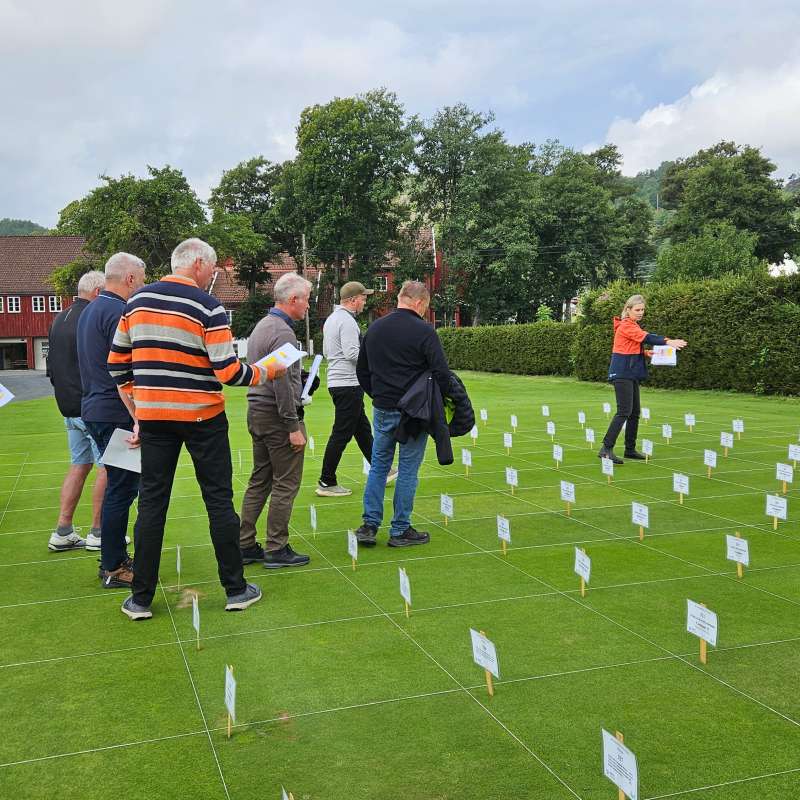
Winter damage of golf turf in northern environments is a persistent challenge, and reseeding is often necessary to promote recovery and to maintain adequate density and uniformity for play. However, adverse conditions associated with spring seedings can negatively impact reestablishment of creeping bentgrass ( Agrostis stolonifera L.) (CBG) on golf greens, tees, and fairways. The objectives of the research were to examine different strategies to promote rapid reestablishment of CBG in early spring, including cultivar selection, use of a synthetic cover, and application of plant health products. To assess the impacts of CBG cultivars and cover on reestablishment, 12 cultivars and two cover treatments (without or with a permeable synthetic cover) were established at two locations in 2021 (South Deerfield, A, and Saint Paul, MN). The effects of plant health products on CBG establishment were assessed in separate field trials at two locations in 2021 and 2022 (South Deerfield, MA, and Grimstad, Norway). Plant health product treatments were applied on a weekly basis following emergence and included: control (water), chitosan, silica, acibenzolar S‐methyl, glycine betaine, seaweed extracts (alone or together with humic substances), trinexapac‐ethyl, and gibberellic acid. Soil and air temperatures were monitored, and plots were visually assessed for changes in percent green turfgrass cover. The use of a permeable cover increased soil temperatures and decreased the time to achieve 50% turfgrass cover by 7–12 days, depending on location and regardless of cultivar. Compared to effect of covering treatment, most CBG did not significantly vary in spring establishment rates, except for Independence, which exhibited slower establishment. Among the various plant health products tested over 2 years and two locations, we did not identify any specific product that consistently enhanced early spring establishment of CBG.
Forfattere
Trygve S. Aamlid Anne Friederike Borchert Trond Olav Pettersen Paula Lawicka Iris Eik Ove HetlandSammendrag
Det er ikke registrert sammendrag