
Anne B. Nilsen
Sjefingeniør
(+47) 917 85 318
anne.b.nilsen@nibio.no
Sted
Ås - Bygg O43
Besøksadresse
Oluf Thesens vei 43, 1433 Ås (Varelevering: Elizabeth Stephansens vei 21)
Sammendrag
Rapporten dokumenterer datagrunnlaget, metodikken og kvalitetssikringen bak utviklingen av FKB‑Grønnstruktur 1.0 – et nytt nasjonalt grønnstrukturkart for bebygde områder i Norge. Kartet gir standardisert og oppdatert informasjon om vegetasjonens utbredelse og høyde, og dekker arealer i og rundt tettsteder, hyttefelt og næringsområder. Metoden omfatter segmentering av vegetasjon i tre sjikt (bunn-, busk- og tresjikt) basert på vegetasjonsindeks (NDVI) og høydemodeller, etterfulgt av avansert topologisk rensing og kartforbedring. Resultatet er et datasett tilpasset bruk i arealplanlegging, klimatilpasning, miljøforvaltning og arealregnskap.
Sammendrag
The precise spatially explicit data on land cover and land use changes is one of the essential variables for enhancing the quantification of greenhouse gas emissions and removals, which is relevant for meeting the goal of the European economy and society to become climate-neutral by 2050. The accuracy of the machine learning models trained on remote-sensed data suffers from a lack of reliable training datasets and they are often site-specific. Therefore, in this study, we proposed a method that integrates the bi-temporal analysis of the combination of spectral indices that detects the potential changes, which then serve as reference data for the Random Forest classifier. In addition, we examined the transferability of the pre-trained model over time, which is an important aspect from the operational point of view and may significantly reduce the time required for the preparation of reliable and accurate training data. Two types of vegetation losses were identified: woody coverage converted to non-woody vegetation, and vegetated areas converted to sealed surfaces or bare soil. The vegetation losses were detected annually over the period 2018–2021 with an overall accuracy (OA) above 0.97 and a Kappa coefficient of 0.95 for all time intervals in the study regions in Poland and Norway. Additionally, the pre-trained model’s temporal transferability revealed an improvement of the OA by 5 percentage points and the macroF1-Score value by 12 percentage points compared to the original model.
Forfattere
Anne B. NilsenSammendrag
NIBIO produces Green Structure Maps (GSM) for Norway that cover built-up areas, including cabin areas. GSM is a hybrid product based on information from remote sensing data and detailed national vector datasets such as roads, water, buildings, and land use. GSM contains 8 classes: Ground, Shrub, Tree, Grey, Road, Water, Building, and Agriculture. QGIS is excellently suited for visual control of GSM. Based on the size of the dataset (number of polygons), a significant random sample of each class is selected to check whether it is correctly classified. You can organize the map layers into different themes, set up QGIS with multiple map windows showing different themes and zoom levels, and use existing plugins to jump from polygon to polygon and compare with aerial images and code whether the classification is correct or not - quickly and efficiently. More comprehensive statistics can then be calculated, and the results can be compared against the requirements to determine if the GSM meets the standards.

Divisjon for kart og statistikk
Considering the Environment and Nature when Building and Operating Ground Mounted Solar Power Plants in Norway
EnviSol's mission is to harmonize the growth of ground-mounted solar power plants in Norway with the imperative to protect biodiversity and ecosystem services. With renewable energy production, preserving nature, and supporting ecosystems all in mind, EnviSol aims to pinpoint the ideal methods and locations for these solar installations, mitigating clashes over land use.
Divisjon for skog og utmark
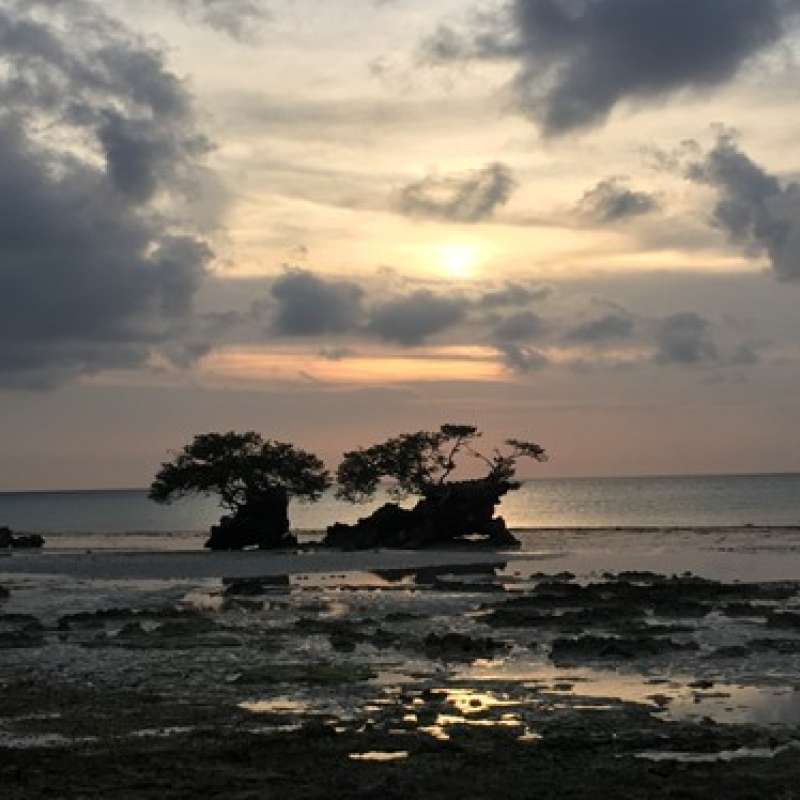
Partnership for Research and Education for Monitoring Coastal Environments in Africa (CoastAfrica)
CoastAfrica is an international research and education partnership that strengthens collaboration between Norwegian and African institutions to monitor coastal environmental change.