Counting reindeer using drones and artificial intelligence
Over the past year, the researchers have collected drone images and video of reindeer in various types of terrain and across different seasons. This material has been used to train an AI model that can automatically recognize and count reindeer. Illustration:allanswart / iStock / Morten Günther
Drones are already an important tool in reindeer husbandry. Researchers are now testing how drones and artificial intelligence can make counting reindeer easier.
Commissioned by the Norwegian Agriculture Agency, researchers from NIBIO, NORCE and Biodrone have worked closely with reindeer herders to explore how drones and artificial intelligence can help make future reindeer counts easier, faster and more accurate – for both authorities and reindeer owners.
Reindeer owners already use drones
“Reindeer herders have been quick to adopt drone technology,” says researcher Gabriela Wagner at NIBIO Tromsø.
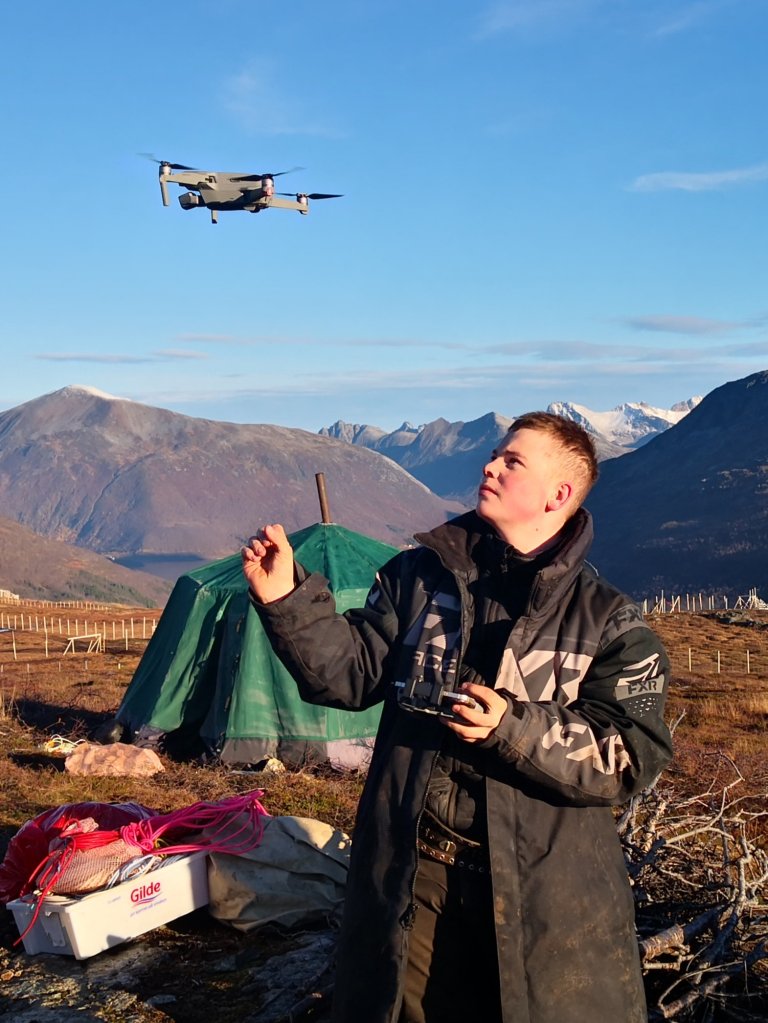
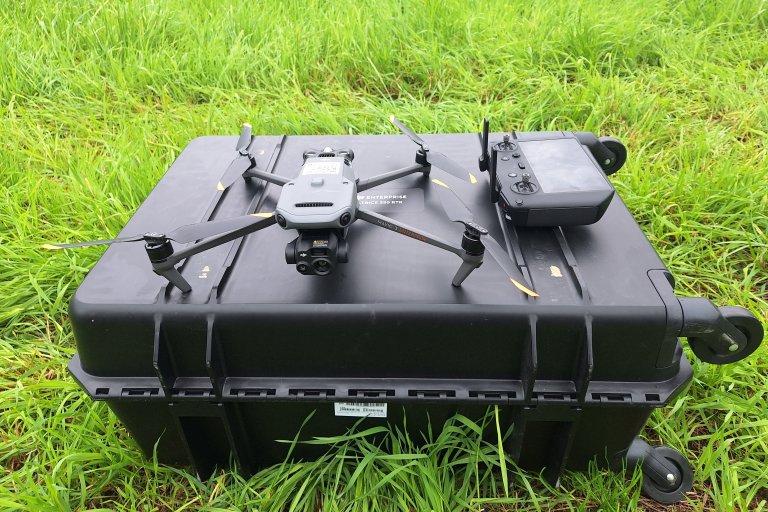
Many drone models are small and light and can easily be carried in a backpack or on a snowmobile. The aerial perspective of the drone allows reindeer herders to quickly gain overview over scattered herds and drones can be used to move animals. Drones can also be used to inspect fences and enclosures, and to locate cadavers or animals that have strayed into difficult terrain.
“Drones can reduce the need for helicopters, snowmobiles or ATVs, which benefits animal welfare, climate and the environment. In addition, drones can save a great deal of time and money,” Wagner explains.
High variability makes AI training more challenging
Gabriela Wagner is the project leader of the drone project ARC – Aerial Reindeer Count.
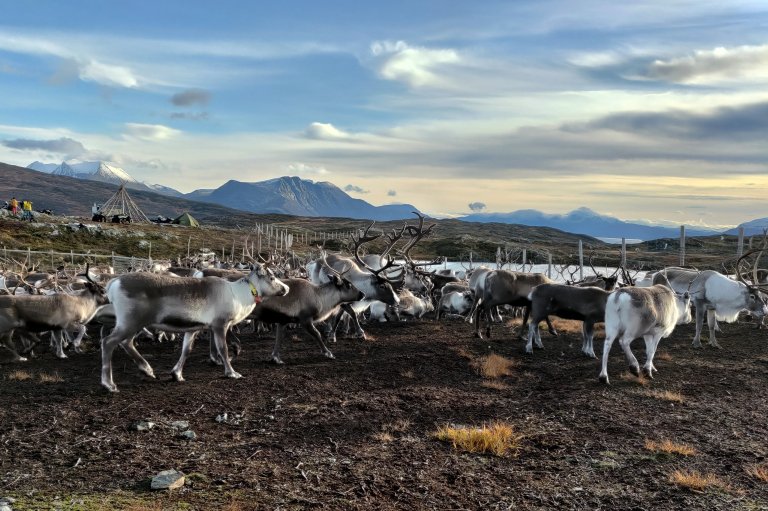
“Over the past year, we have collected drone images and videos of reindeer in different types of terrain and across seasons. This material has been used to train an AI model that can automatically recognise and count reindeer,” the NIBIO researcher explains.
The researchers have tested different flight altitudes and camera angles across seasons. Recognising reindeer is not always as straightforward as one might think.
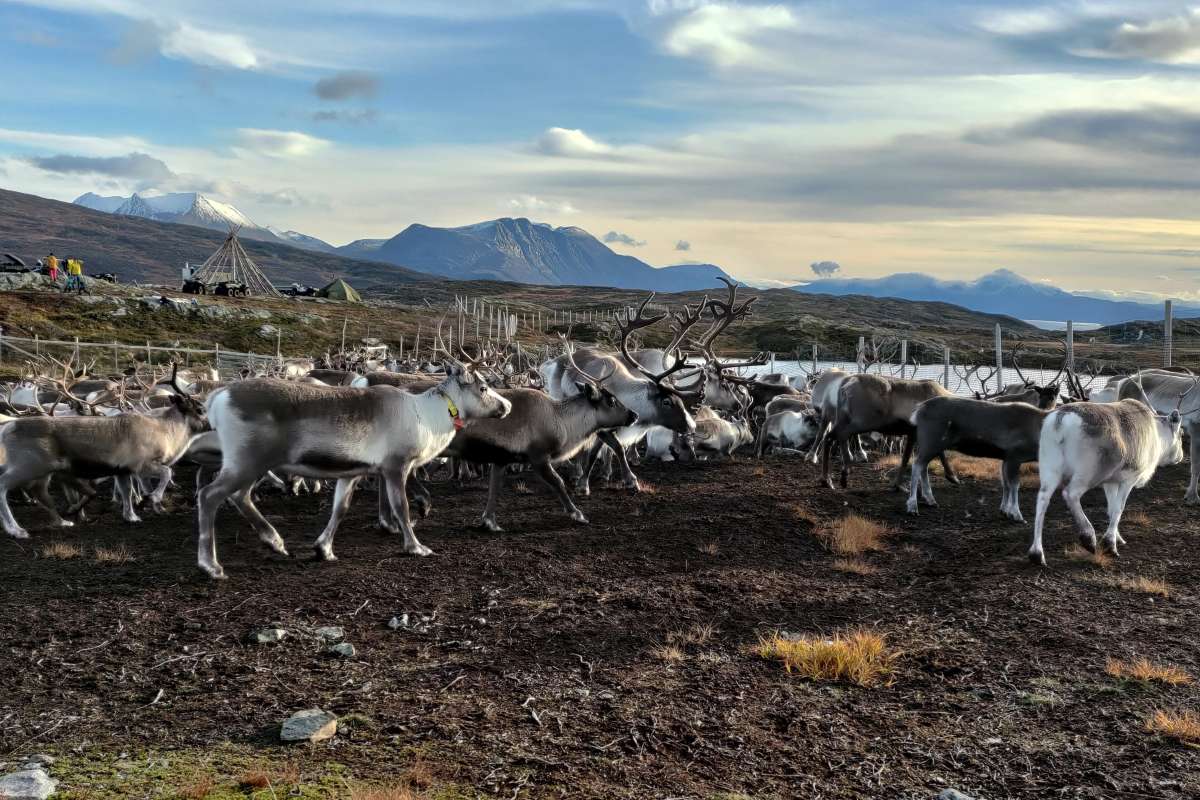
Reindeer change their appearance throughout the year. They may have summer or winter coats, some have antlers, and they come in many different colours and patterns. Unlike white sheep on summer pasture, reindeer can look quite different from one another. The terrain they move through also varies, with backgrounds that may be green, brown, grey or white depending on habitat and season.
“We have tried to capture as much of this variation as possible,” Wagner explains.
Working to improve the model
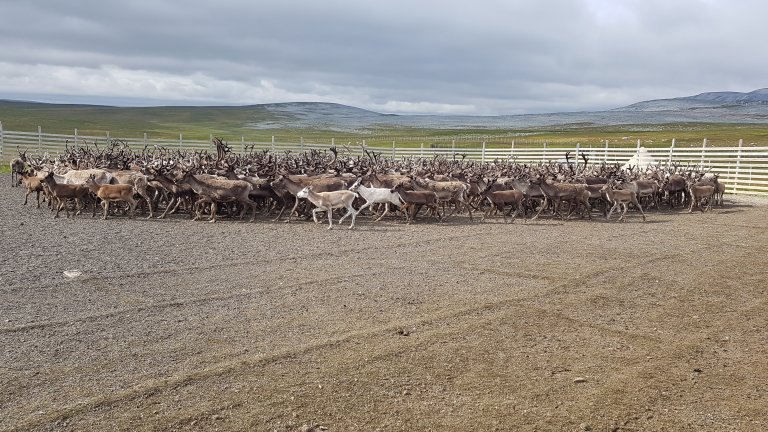
The AI model has not yet been trained to identify reindeer in dense vegetation, but it performs very well on snow and in open terrain, where it detects around 90 % of all reindeer. However, distinguishing white reindeer on snow can be challenging. Conversely, large rocks on snow-free ground can be mistaken for reindeer.
The researchers are continuing to improve the model. The more verified data they have, the more accurate the model becomes. Considerable emphasis has been placed on quality control, with images carefully annotated by humans to teach the AI model what to look for.
“As a control, we have had well-trained people identifying reindeer in drone images. Their accuracy has exceeded 99 per cent, but the drawback is that this work is extremely time-consuming.”
User manual for drone pilots
As part of the project, the researchers have also developed a user manual for drone pilots. It provides guidance on how to fly in order to obtain the best possible images for counting.
The model performs best when the drone flies between 40 and 120 metres above ground, with a camera angle between 45 and 90 degrees. On snow-covered ground, the model has achieved accuracy levels above 90 %.
What happens next?
The project is now entering a new phase in which the researchers will further develop the technology. The goal is to make the system even more accurate and user-friendly.
The researchers want to make the technology available to reindeer owners, which means the AI model must be placed on a publicly accessible platform. This platform will be developed and tested during 2026.
“The plan is for reindeer owners themselves to upload images or video of their own herds, and for the AI model to use this material to count the number of reindeer. Over time, the method could also be used in official reindeer counts, which would be highly time- and cost-efficient,” Wagner explains.
Thermal drones can count reindeer during the dark season
“We are already working on a new AI model for recognising and counting reindeer using thermal drones,” the NIBIO researcher says.
Thermal counting does not work throughout the year, but the method may be relevant for reindeer owners in winter, when the ground is frozen and it is difficult to locate animals in the dark.
Technology is here to stay
The ARC project has already shown that it is possible to use drones and artificial intelligence to count reindeer.
“We believe this can become a useful tool, both for reindeer herders and administration. In the long term, we also believe the technology could be further developed for use in other contexts, such as monitoring wild reindeer on the Hardangervidda plateau or Svalbard, or other wild animals in Norwegian nature,” Wagner concludes.
Contacts

Gabriela Wagner
Research Scientist
-
Division of Forest and Forest Resources
(+47) 950 06 940 gabriela.wagner@nibio.no Office Location: Tromsø

.jpg)
Contacts
Gabriela Wagner
Research Scientist
-
Division of Forest and Forest Resources
(+47) 950 06 940 gabriela.wagner@nibio.no Office Location: Tromsø