When shrubs disappear: Long-lasting effects of drought in Southwest China
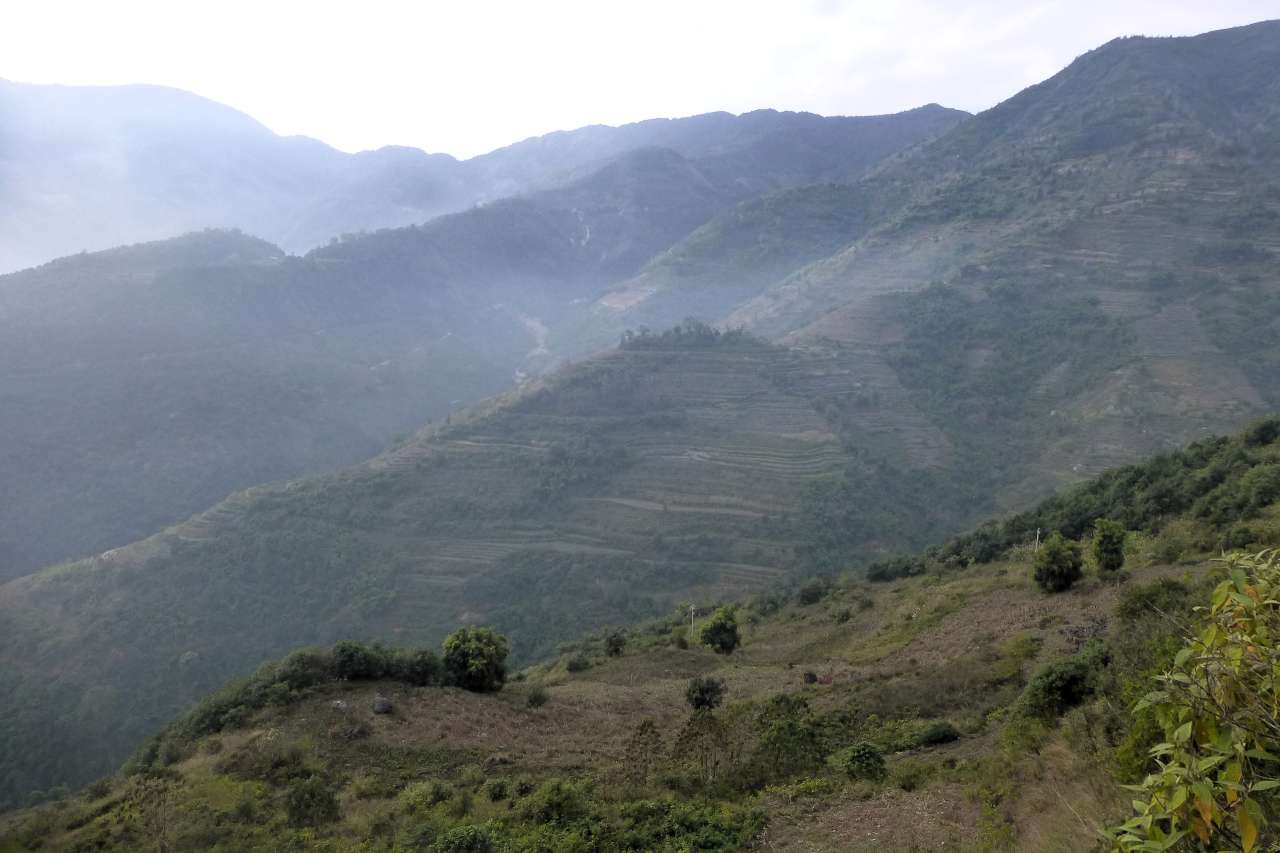
Views along Yunnan Route 214, as it descends ca. 1500 m over a 38-km stretch, from Potou Village toward the Red River valley. Potou Township, Jianshui County, Yunnan. Photo: Vmenkov, CC BY-SA 3.0, via Wikimedia Commons
An extreme drought in 2019 caused long-lasting changes in a savanna ecosystem in Southwest China. A new study shows how the loss of shrubs altered both vegetation structure and the ecosystem’s ability to regulate heat.
Droughts are becoming both more frequent and more intense in many parts of the world. Savannas, which cover nearly 20 per cent of the Earth’s land surface and play a key role in carbon, water and energy cycles, can therefore be severely affected when an exceptionally dry period strikes.
Previous research has shown how savannas respond during drought. However, less is known about what happens afterwards.
In a recent Ecology Letters study, researchers, including Dr Junbin Zhao from the Norwegian Institute of Bioeconomy Research (NIBIO), investigated the long‑term consequences of an extreme drought that hit a savanna in Yunnan Province in 2019.
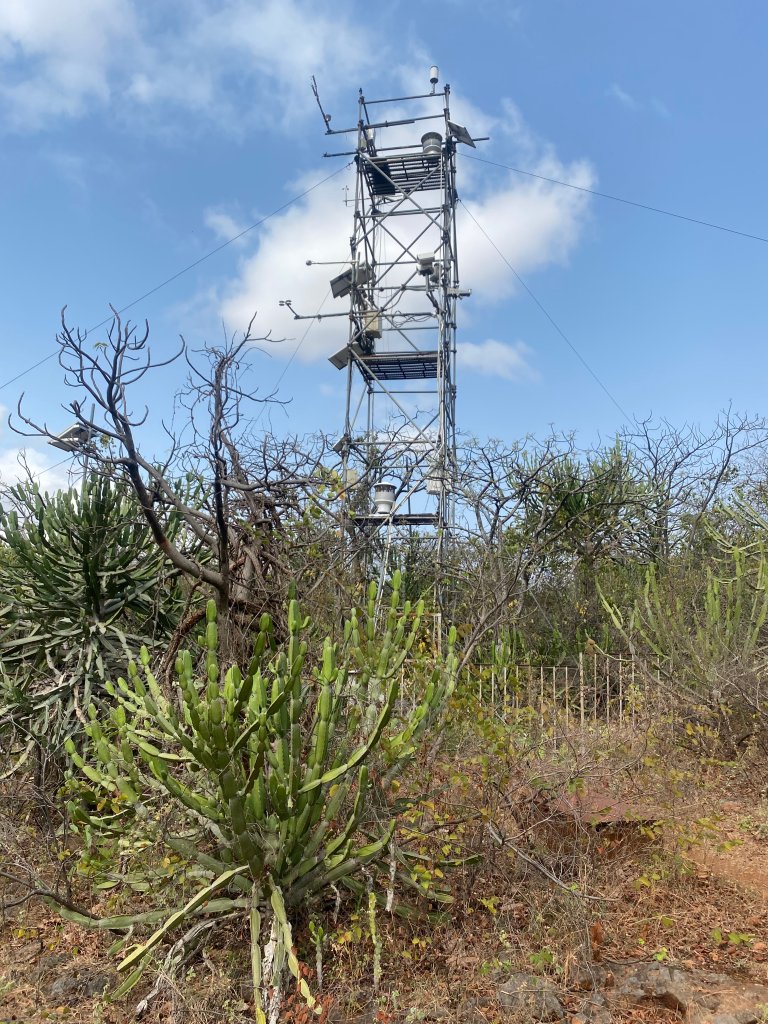
Over six years (2017–2022), the team combined field vegetation composition observations with continuous measurements of carbon uptake, evapotranspiration and the amount of sunlight reflected from the landscape.
Shrubs declined, trees fared better
The results show that the savanna was affected not only during the drought itself. The vegetation, especially shrubs, continued to decline in the years that followed.
“In the years after the drought, our measurements showed that shrub numbers had fallen to about half of pre‑2019 levels, whereas only around 12 per cent of the trees disappeared,” says Dr Zhao.
He explains that several factors made shrubs particularly vulnerable.
“Many of the shrubs in the area keep their leaves for longer during dry periods. Combined with shallow root systems, this makes them more exposed to drought stress,” he says.
Trees, which have deeper roots, were better able to reach water stored deeper in the soil and therefore avoided the same level of hydraulic failure.
“This meant that trees became more dominant than shrubs after the drought, and this shift in vegetation composition changed how the savanna functioned,” Zhao explains.
_cropped.jpg)
Growth returned, but the ecosystem behaved differently
Photosynthesis dropped sharply during the 2019 drought but returned to normal the following year. Yet even though carbon uptake recovered quickly and became even stronger than before the drought, the researchers found that the savanna did not behave as it once had.
“We observed two key processes that did not recover after the drought. First, evapotranspiration remained low for several years. That means both evaporation from the soil surface and the water normally released through plant leaves were greatly reduced,” Dr Zhao says.
He explains that lower vegetation density and shifts in species composition contributed to this reduced evapotranspiration. A warmer, drier microclimate also limited how much water the plants were able to release.
The reflection of sunlight from the landscape, the so‑called albedo, also remained low after the drought.
“When the shrubs disappeared, more of the dark bedrock became exposed. Combined with a greater proportion of tree canopies with darker leaves, this meant the savanna absorbed more sunlight than before the drought,” Dr Zhao says.
The result was a savanna that continued to take up carbon effectively but had lost much of its climate-cooling ability through evapotranspiration and light reflection.
May contribute to further warming
Dr Zhao emphasises that the drought’s legacy involves more than reduced plant growth.
“Savannas normally cool themselves through the evaporation of water from soil and leaves. When that process weakens, temperatures rise more easily,” he says.
According to Dr Zhao, this is a key reason why heat absorption in the savanna has remained high several years after the drought.
“Our study shows that changes in vegetation contributed to a clear positive radiative forcing. In other words, more of the incoming solar energy was converted into heat, long after the savanna looked green again,” he says.
He adds that such long‑lasting effects of drought are unlikely to be limited to the savanna in Southwest China.
“In areas where extreme drought is becoming more common, our study suggests that even small changes in which plant groups dominate can have major consequences for how landscapes handle heat and water,” Dr Zhao says.
“This means that an ecosystem can recover its carbon uptake quite quickly yet still struggle to regain its ability to regulate heat and moisture — a deeper shift that may not be visible at first glance.”
Contacts

Collaboration behind the study
This study is part of an ongoing research collaboration between Xishuangbanna Tropical Botanical Garden (XTBG) of Chinese Academy of Sciences (CAS), and the Norwegian Institute of Bioeconomy Research (NIBIO).
The two institutions formalised their partnership with a Memorandum of Understanding signed on 22 May 2025, aimed at strengthening joint work on biodiversity, ecosystem monitoring, climate‑impact research and sustainable bioresource management.
The savanna drought study published in Ecology Letters is one of the scientific outcomes of this collaboration, combining XTBG’s long‑term ecological observations with NIBIO’s expertise in ecosystem and climate analysis.

Contacts
Publications
Authors
Palingamoorthy Gnanamoorthy Junbin Zhao Yajun Chen Linjie Jiao Boonsiri Sawasdchai Zhang Jing Abhishek Chakraborty Pramit Kumar Deb Burman Sung‐Ching Lee Thomas A. M. Pugh Yiping Zhang Qinghai SongAbstract
ABSTRACT Increasing drought frequency and intensity affect biophysical functions of natural ecosystems. In tropical semi‐arid savannas, while immediate drought effects are well‐studied, the drought legacy effects on vegetation composition and associated ecosystem functions remain unclear. We used data of vegetation composition, net ecosystem CO 2 exchange, surface albedo and evapotranspiration (ET) in 2017–2022 from a savanna ecosystem, Southwest China, to investigate the legacy effect of an extreme drought event that occurred in 2019. Vegetation declined continuously for 3 post‐drought years. While tree numbers declined by 12%, shrub numbers dropped by 50% compared with pre‐drought levels, shifting vegetation dominance toward trees. This structural change caused sustained reductions in albedo and ET, which remained below pre‐drought levels, despite gross primary production recovering in the years immediately post‐drought. Vegetation shifts disproportionately impact ecosystem functions, with energy and water fluxes exhibiting greater vulnerability and potentially enhancing regional warming as droughts increase in Asian savannas.