How to succeed with pruning apple trees
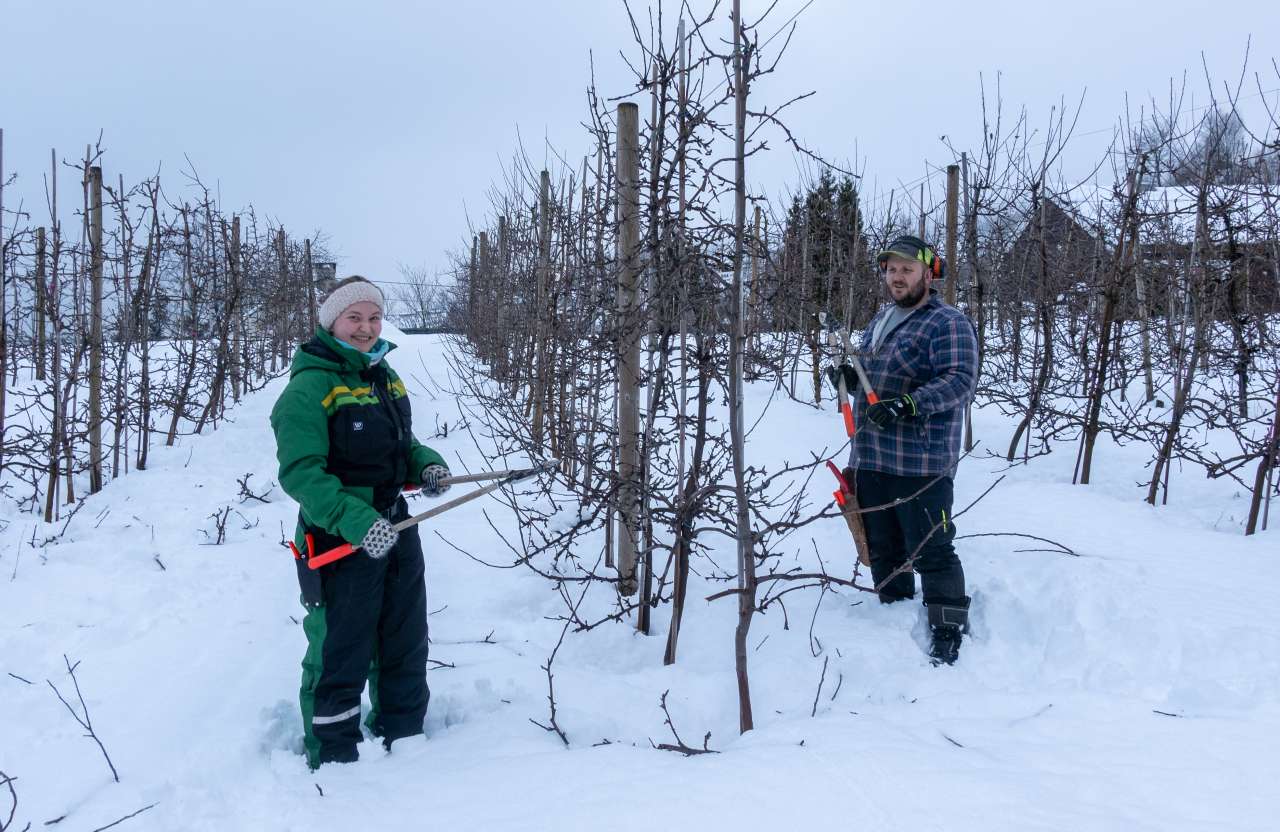
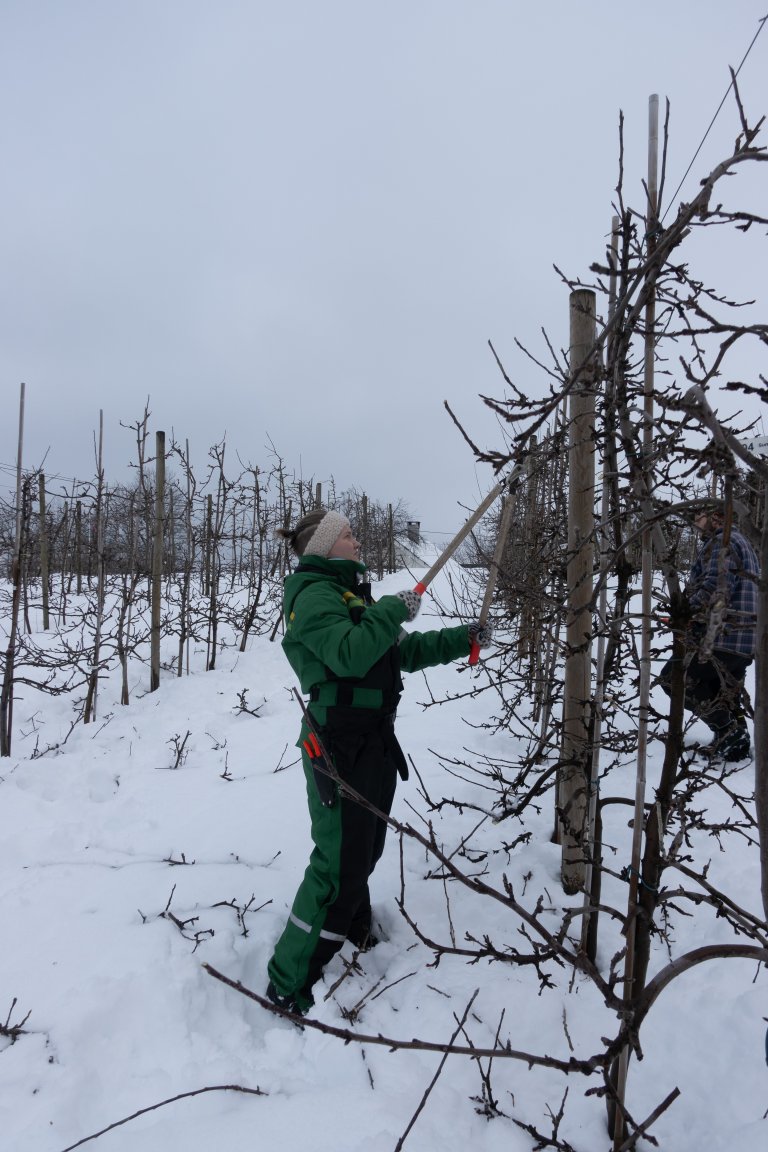
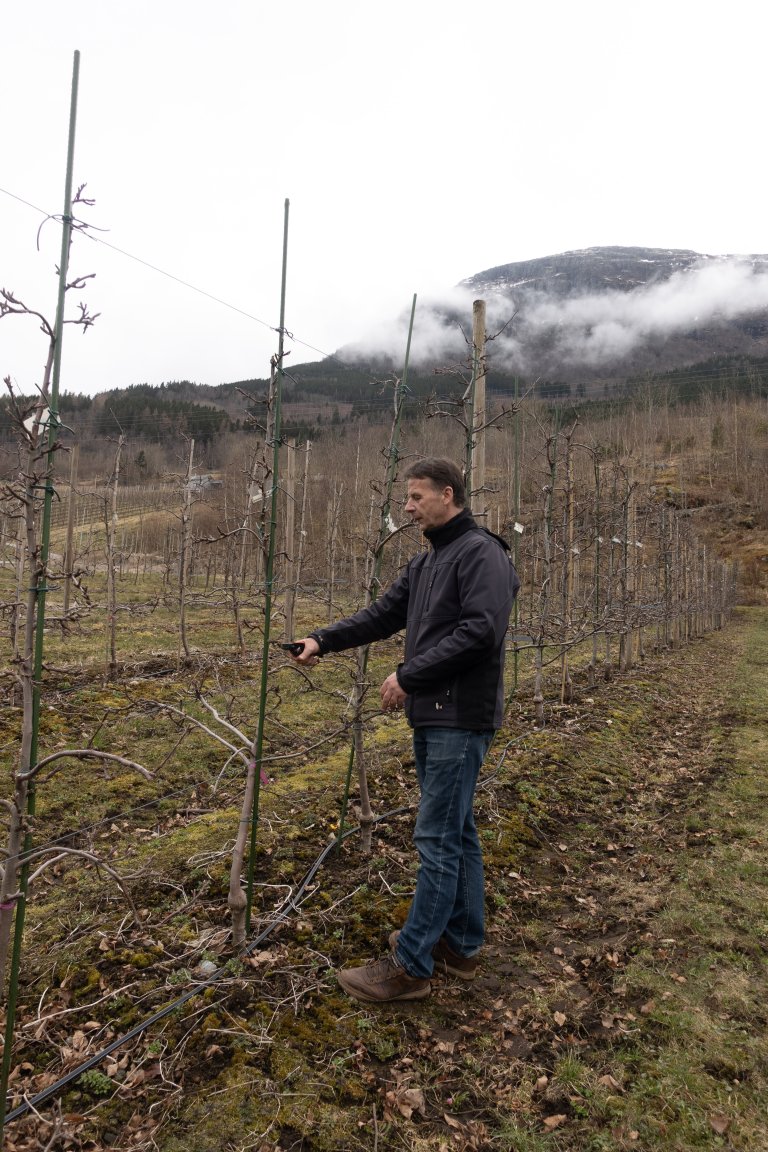
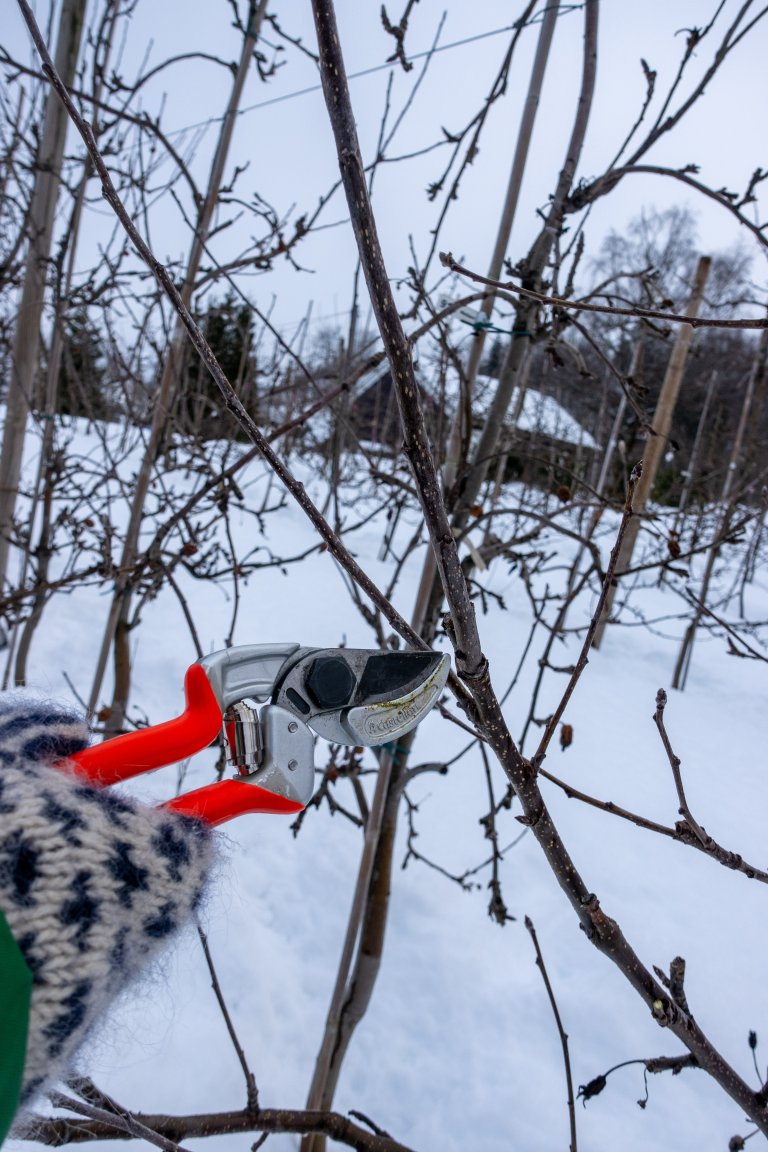
Signe Glømmen and Jard Opedal pruning apple trees in an orchard at Lofthus in Ullensvang. Photo: Hege Ulfeng
Pruning fruit trees is an art that only a few truly master, but there are some simple principles that anyone can learn.
As the days grow shorter and temperatures drop, apple trees enter winter dormancy. Growth stops, the leaves fall, and the buds become dormant. This dormant period — typically from November to March in the Nordic countries — is the best time to prune apple trees.
“When the tree is dormant, you can see more clearly what you are doing, and the cuts are less stressful for the tree,” explains Signe Glømmen, apprentice at NIBIO Ullensvang in Hardanger, Norway.
“It is possible to prune at other times of the year as well, but you should absolutely not prune during flowering!” she emphasizes.
Main stem and vigour
Glømmen explains that there are some main principles that apply to most apple trees, regardless of age, size, or variety.
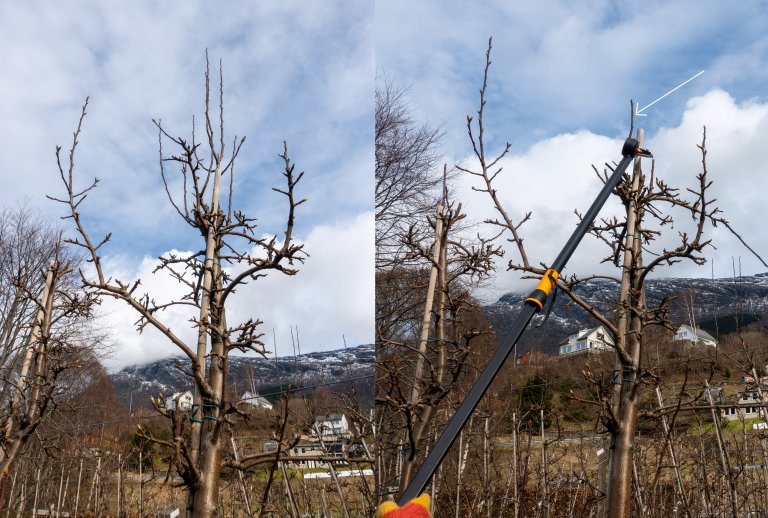
“A good starting point is to give the tree a clear leader, or main top shoot. This prevents several strong branches from competing to be the main stem and using much of the tree’s energy. If you have a very vigorous tree, you should choose a slightly weaker leader. If the tree is weak, you can allow a somewhat stronger leader to dominate,” says Glømmen.
“Also remember that you decide the height of the tree – keep it low enough so that you can reach all the fruit from a small ladder.”
Preserve the best branches
The goal is an open, light, and healthy tree that is reasonably symmetrical. To achieve this, it is important to distinguish between good and less suitable branches. Simply put, you want young, healthy branches that grow outward.
“Think ‘personal space’,” Glømmen encourages.
“Branches that grow inward into the canopy, are positioned close to the trunk, have a sharp angle (less than about forty degrees), or cross other branches should be removed. This allows more light and air into the canopy, improving fruit quality. An airy tree is also less susceptible to disease,” she explains.
To keep the tree young, branches should not become too old and thick. At the lower part of the tree, branches thicker than half the trunk’s diameter should be removed. Higher up, they should preferably not become thicker than one third of the trunk at the point where they emerge.
“To rejuvenate the tree, you can cut back old branches to a stub or to a one-year shoot. New, younger wood produces healthier trees and better fruit. Root shoots and very low branches can also be removed – your back will thank you when it’s time to harvest!”
At the same time, it is important not to be overly enthusiastic. The larger the branches you remove, the more energy the tree must use to heal the wounds. Remove no more than two to three large branches per year.
Get to know your tree
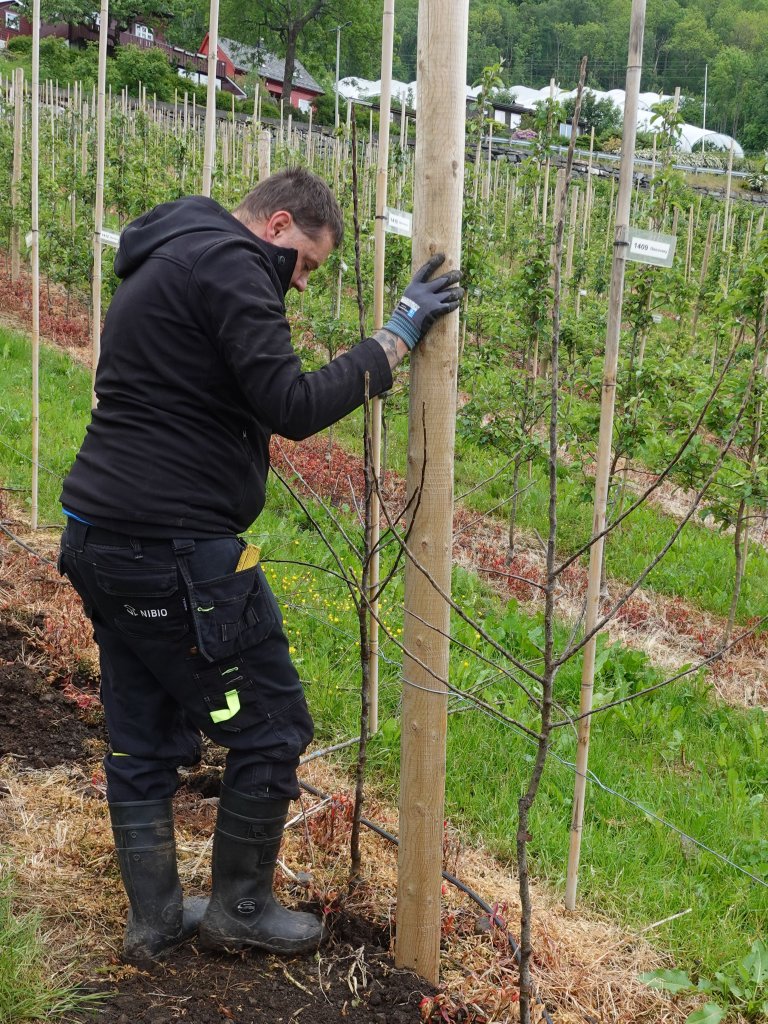
It helps to understand how the tree grows. One-year shoots are the branches formed during the previous season. They respond most strongly to pruning, while older wood produces less new shoot growth.
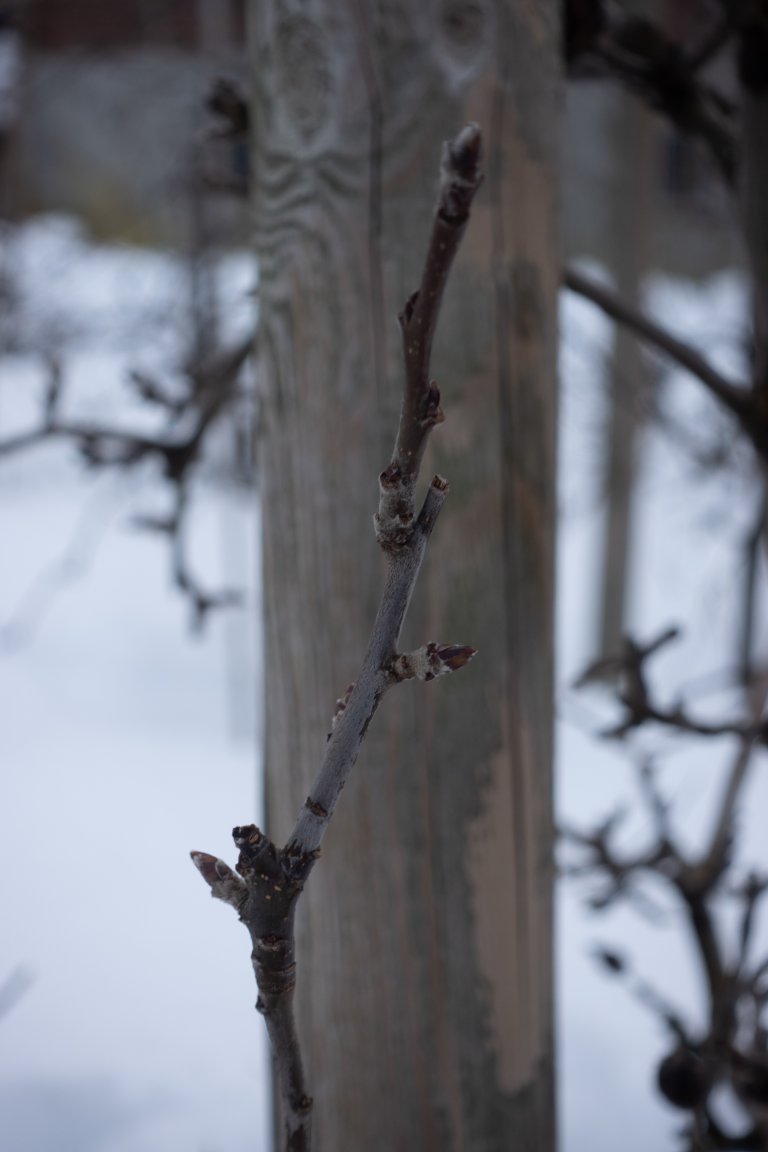
Flower buds are usually rounder and flatter, while leaf buds are pointed. In most varieties, flower buds are found on two-year-old and older wood. If you want to stimulate growth in a young branch, it is important that the bud at the tip of the shoot is a leaf bud.
“In apple trees, it is common to cut back the younger branches. To follow this practice in the best possible way, I recommend reading more about this on the Norwegian Agricultural Advisory Service website or other websites with information on pruning for professionals,” says Glømmen.
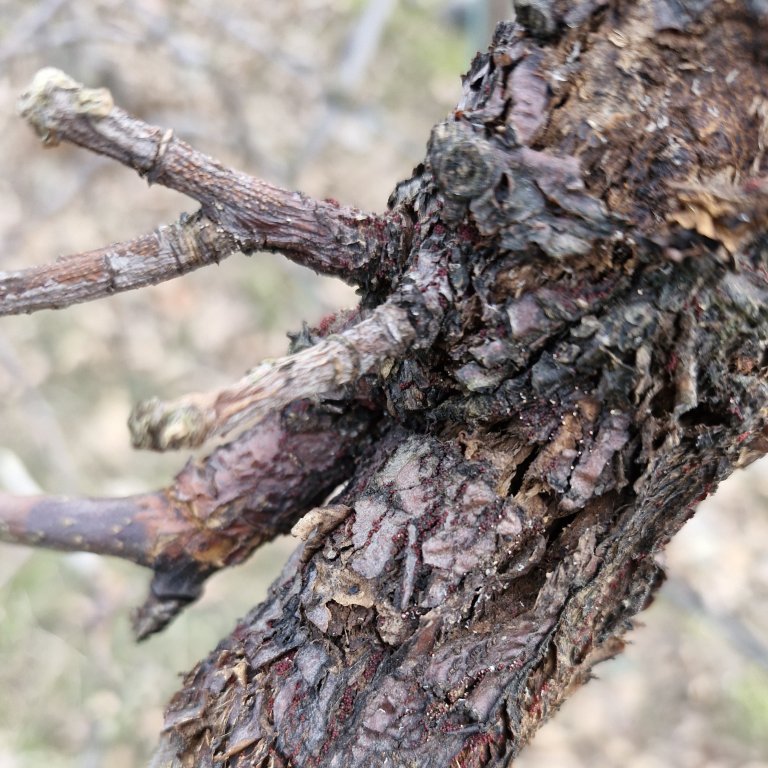
It is also important to check trees for disease and damage. Apple canker is not uncommon in Norwegian gardens. You may see red fruiting bodies in the bark, on branches, and on the trunk. Such areas should be removed, and both branches and leaves from infected trees should be taken out of the garden. If the entire tree is in poor condition, it should be removed completely.
Practice makes perfect
It may feel difficult the first time you stand under the apple tree with pruning shears in hand, but every cut is a learning experience. Start cautiously, follow a few clear principles, and observe how the tree responds throughout the season.
“Over time, you develop your own ‘feel’ for what works, and both you and your apple trees will improve with each winter. Practice makes perfect!” concludes Glømmen.
Contacts
Signe Glømmen
Clerical Apprentice
-
Estates and Facilities
(+47) 413 78 263 signe.glommen@nibio.no Office Location: Ullensvang
Young apple trees – don’t prune too hard
In young trees, the main goal is to establish a good structure with a clear central leader and a few well-placed side branches.
– “You shouldn’t prune young trees too harshly. Heavy pruning triggers vigorous growth and delays fruiting,” emphasizes Darius Kviklys, researcher and head of cultivation techniques at NIBIO Ullensvang.
It’s better to make a few careful cuts each year rather than a major overhaul. This encourages steadier growth, earlier fruiting, and a tree that’s easier to manage over time.
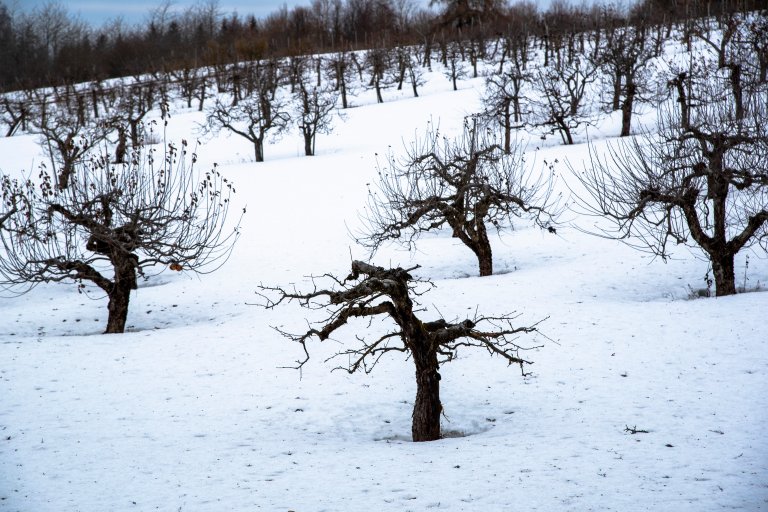
Older Apple Trees – Light, Renewal, and Limited Height
In older, larger trees, the focus is more on renewal and opening up the canopy. The goal is to let more light into the crown and to encourage more fruit on younger wood.
– In some cases, you can even remove the main leader and create an open “vase-shaped” crown with four strong branches pointing outward, explains Kviklys.
Shorten long, heavy branches so that the fruiting zone is closer to the trunk, and watch the top of the tree! Keep the tree as low as possible so you can reach the fruit from a small ladder.
Removing large branches will stimulate strong regrowth in the form of so-called water shoots. Remember to remove these shoots during the summer.
Tips
Different apple varieties have different pruning requirements. If you are buying a new apple tree, ask if there is anything special you should consider when pruning it. Find out whether the tree is weak- or strong-growing and how it should be pruned during the first two to three years.
Contacts
Signe Glømmen
Clerical Apprentice
-
Estates and Facilities
(+47) 413 78 263 signe.glommen@nibio.no Office Location: Ullensvang