Three national clone banks to safeguard Norway’s food genes for the future
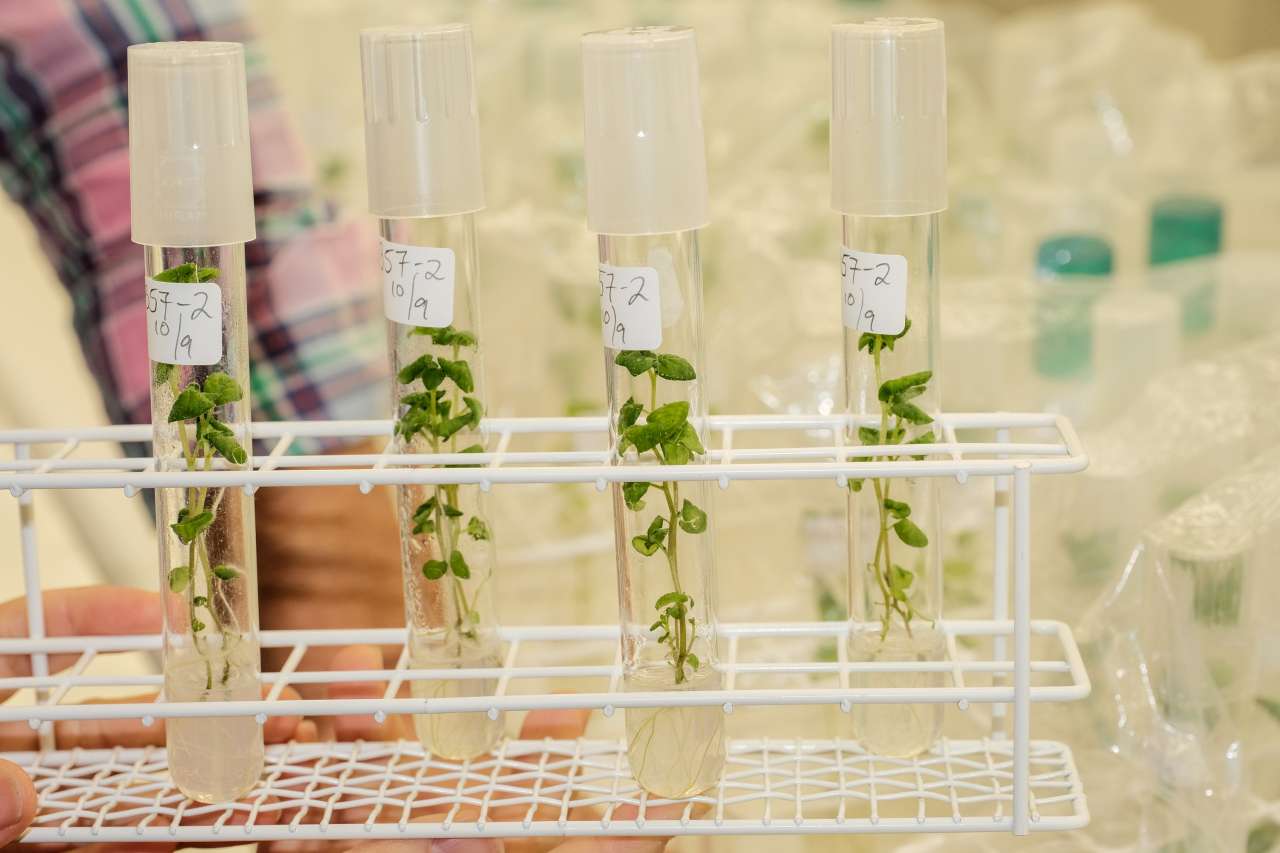
At NIBIO Ås, old potato varieties are conserved in test tubes. Photo: Ragnar Våga Pedersen
All countries follow the state of major banks closely, while gene banks around the world draw far less attention. Yet the conservation of genetic material from food crops may be even more important for the future than money. Recently, Norway established three national clone banks to safeguard Norwegian genetic material – and thereby Norwegian food security.
Wealth means nothing to a hungry man. And without conserving the genetic diversity of food crops, global food production may be at risk. For this reason, the conservation of genetic diversity is an important part of the UN Sustainable Development Goals. Other international agreements have also been adopted to conserve and use genetic diversity, and which Norway has committed to implementing.
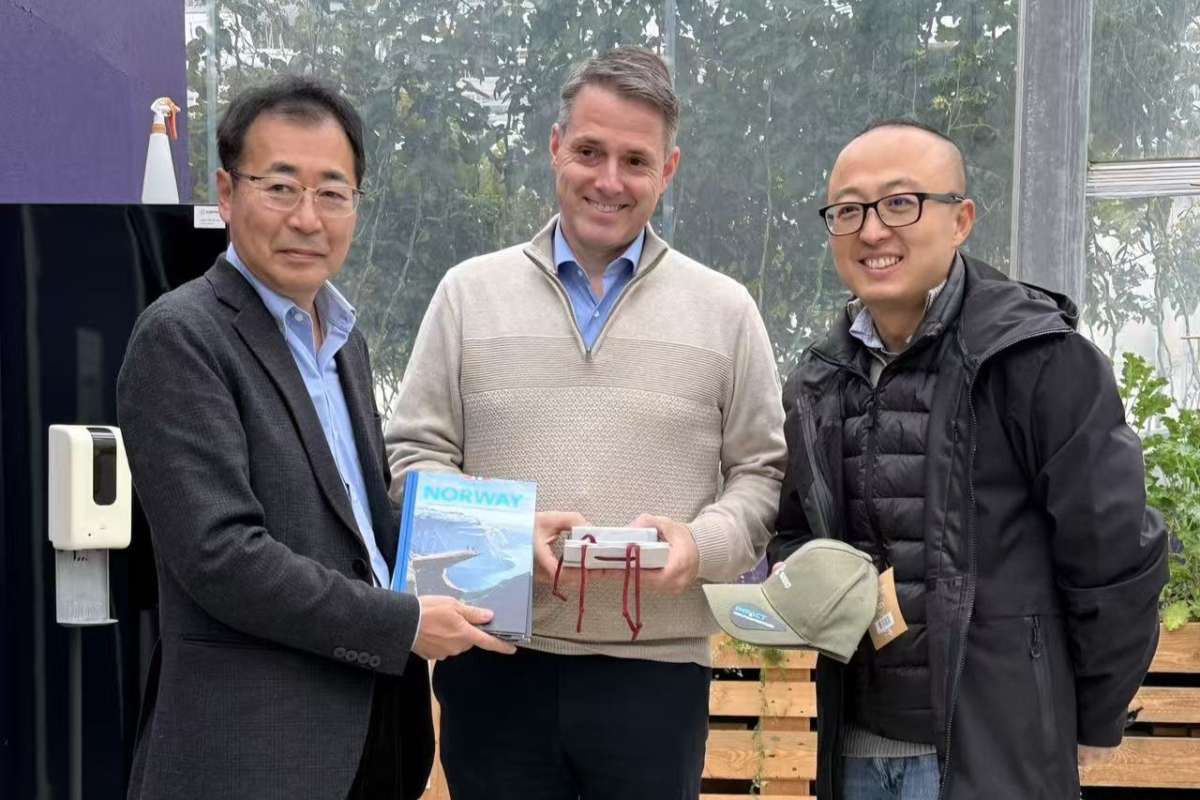
“All countries depend on genetic resources from food plants in other countries,” says the Norwegian Minister of Agriculture and Food, Nils Kristen Sandtrøen.
“That is why international cooperation is important. It is also essential for Norway in order to develop varieties that are adapted to our climate.”
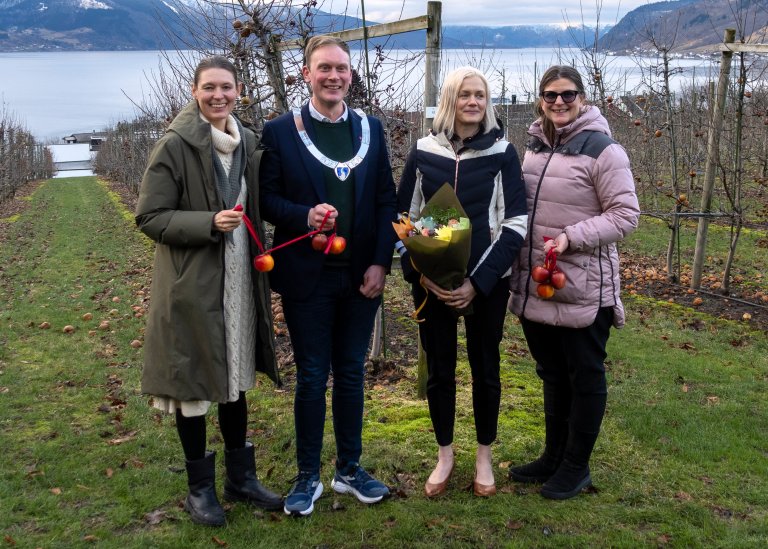
“Most nations have committed to conserving the genetic diversity of food crops that are characteristic of their country. We work continuously to secure Norway’s conservation efforts, and the most recent step has been the establishment of three new clone banks for potatoes, selected vegetables and herbs, and fruit and berries,” Sandtrøen explains.
Clone banks for old varieties
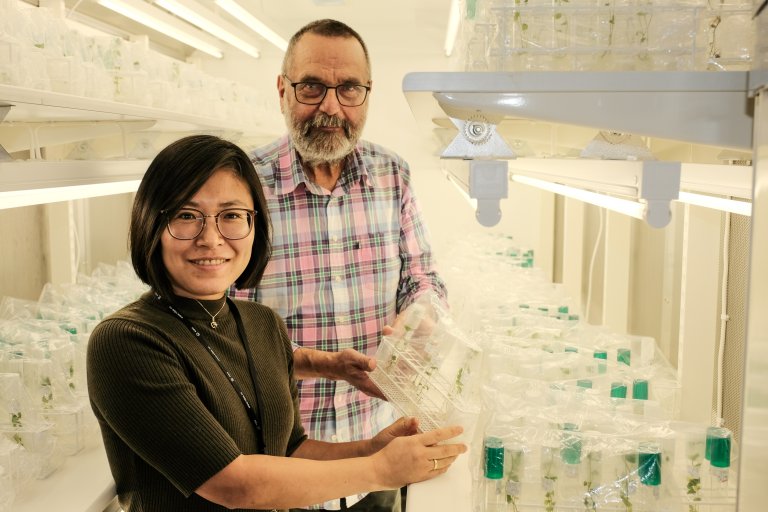
The three national clone banks were launched in 2025 and 2026. NIBIO Ås has been given main responsibility for potatoes. NIBIO Landvik and NIBIO Apelsvoll are responsible for clones of a range of vegetables and herbs, while Njøs Fruit and Berry Centre is responsible for the main collections of fruit trees and berry bushes.
“There is a total of 27 different clone collections in Norway,” says Linn Borgen Nilsen, Head of the Norwegian Genetic Resource Centre.
“Twenty-five of these are living plant collections. They are located at the Norwegian University of Life Sciences (NMBU) at Ås, at several of NIBIO’s research farms, at Sagaplant in Midt-Telemark, at Njøs Fruit and Berry Centre in Leikanger, and in various botanical gardens, museums and local heritage sites. Many of these will continue to play an important role in the conservation system.”
“The establishment of the three national clone banks provides a clearer division of responsibilities and strengthens the overall framework for conservation of clonal crops in Norway.”
The aim is for the clone banks to ensure that the collections are securely conserved, and that the plant material remains healthy. The clone banks will also establish cooperation with other actors to ensure that all varieties are backed up in at least one additional location. Another important goal is to make healthy plant material more accessible for research and breeding, as well as for education and cultivation by hobby growers.
Using old varieties
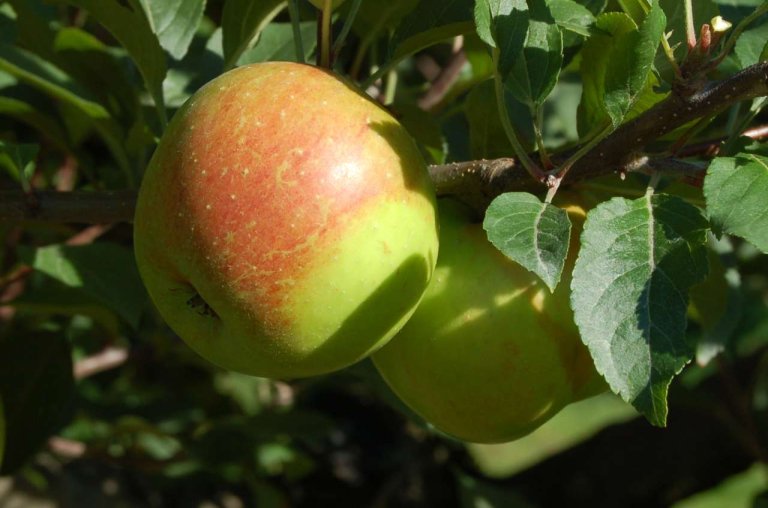
The apple variety ‘Senit’ is an example of why it is important to preserve old varieties. It is a cross between the modern Czech variety ‘Rubinstep’ and the Norwegian variety ‘Martaeple’, which in turn has the old varieties ‘Torstein’ and ‘Lærdalseple’ as parents.
“‘Senit’ is a crisp and juicy apple, developed at Njøs Fruit and Berry Centre and launched in 2023. One important reason for using ‘Martaeple’ as a parent variety was its strong resistance to apple scab,” explains Dag Røen, who works with variety development at Njøs on behalf of Graminor.
There is also great interest in older varieties among garden enthusiasts and hobby growers. “KVANN – Norwegian Seed Savers” is an association that currently serves as a link between the national clone banks and private individuals, distributing healthy plant material from clone banks. This is important for keeping old varieties in active use. It generates new knowledge and helps preserve a living cultural heritage.
Seeds or clones – different methods for genetic conservation
Food crops are propagated either by seed or through so-called vegetative propagation, where a part of the plant is used to produce new plants, for example through grafting of fruit trees. Vegetative propagation can also take place through cell culture in laboratories. The new plants are genetically identical to the mother plant – so-called clones.
Seeds are relatively easy to conserve. Gene banks regularly grow plants and harvest new seeds for storage. Seeds from some plants can remain viable for several hundred years. The Svalbard Global Seed Vault stores backup seed samples from all over the world for the future. Many Norwegian seeds are also conserved through Nordic cooperation at NordGen, which operates a large seed bank in Alnarp, Sweden.
“It is more demanding to conserve food crops that must be propagated vegetatively, such as fruit trees, berry bushes, potatoes and certain vegetables and herbs,” explains Borgen Nilsen.
“These must either be maintained as living plants in the field or conserved using methods such as in vitro culture and cryopreservation.”
“In Norway, most clonally propagated plant material is conserved outdoors in the field. In that case, good plant health is crucial. Without it, we risk losing valuable material from the gene banks and, in the worst case, spreading diseases and pests from plant collections to areas where food crops are grown,” she adds.
The new organisation, with three gene banks, each taking primary responsibility for one plant group, will make it easier to address both this and other challenges in the conservation work.
Contacts

Linn Borgen Nilsen
Head of Norwegian Genetic Resource Centre
-
Division of Survey and Statistics
(+47) 413 88 502 linn.nilsen@nibio.no Office Location: Ås O43
Gene bank and clone bank
“There are several ways to preserve genetic material from food plants. Gene bank is a collective term, while a clone bank is one specific type of gene bank. All gene banks secure genetic resources for research, breeding, and future production.”
Clone bank
• Stores living plants that are genetically identical copies (clones)
• Used for plants that cannot be conserved as seeds, such as fruit trees, berry bushes and potatoes
• Plants are propagated through grafting, cuttings or cell culture
• Safeguards genetic resources for research, breeding and future production
Genetic resources under pressure
Genetic diversity in food crops has declined dramatically since the Green Revolution. FAO’s third global report on the state of plant genetic resources for food and agriculture (FAO, 2025) underscores the severity of the situation. According to the report, the world’s food system is now heavily concentrated around a small number of crops, increasing vulnerability to climate change, pests and diseases. The ongoing loss of genetic resources from both agriculture and nature weakens the foundation for future plant breeding and, in the long term, threatens food security.
In Norway, the Ministry of Agriculture and Food (LMD) is the overarching authority for conservation efforts. The Norwegian Agriculture Agency has administrative responsibility, while the Norwegian Genetic Resource Centre at NIBIO has professional responsibility.
The Plant Treaty (2004)
The International Treaty on Plant Genetic Resources for Food and Agriculture is a global, legally binding agreement that aims to ensure the conservation and sustainable use of plant genetic resources for food and agriculture, while ensuring the fair and equitable sharing of benefits arising from their use.
The treaty has established a multilateral system that gives all countries access to genetic material from 64 important food and feed crops in the public domain, and recognises farmers’ rights as a central element in efforts to ensure food security and genetic diversity.
Contacts
Linn Borgen Nilsen
Head of Norwegian Genetic Resource Centre
-
Division of Survey and Statistics
(+47) 413 88 502 linn.nilsen@nibio.no Office Location: Ås O43