
Christian Wilhelm Mohr
Research Scientist
Biography
Researcher at the Department of Forest and Climate.
Working on Land Use, Land-Use Changes, and Forestry (LULUCF) related to greenhouse gas emissions. My area of focus is related to the analysis and estimation of emissions and uptake from LULUCF carbon stocks, development of projections of land development, and associated emissions and uptake under different scenarios, and LULUCF guidelines and regulations related to national reporting and accounting (IPCC, UN and EU). I coordinate the national greenhouse gas inventory for the LULUCF sector under the UN Climate Convention and the EU.
Area of expertise: LULUCF, climate change, biogeochemistry/environmental chemistry (processes and cycles in soil and water), analytical chemistry, modelling, and programming in R.
Abstract
Arealbrukssektoren (LULUCF) omfatter arealbruk og arealbruksendringer, med tilhørende utslipp og opptak av CO₂, CH₄ og N₂O. Framskrivningene bygger på Norges rapportering til FNs klimakonvensjon (NID 2026) og i hovedsak på observerte data for referanseperioden 2011–2024. De representerer en «business as usual»-utvikling basert på vedtatt politikk. Utviklingen levende biomasse, død ved, strø, og mineraljord i skog er framskrevet med SiTree og Yasso20 under klimascenarioet RCP 4.5. Netto opptak har gått ned siden toppårene 2008–2010. I referanseperioden var gjennomsnittlig netto opptak 14,5 mill. tonn CO₂-ekv. per år. Framskrivningene viser videre nedgang til om lag 2,2 mill. tonn per år i 2030–2050, før opptaket øker til 7,0 mill. tonn per år i 2090–2100. Utviklingen styres i stor grad av netto opptak i skog. Dyrka mark, utbygd areal, beite samt vann og myr er netto utslippskilder, og forventes å forbli det. De største utslippene kommer fra drenert organisk jord og avskoging, særlig til utbygd areal. Under EUs LULUCF-regelverk forventes et samlet underskudd mot netto-null-målet på om lag 11,1 mill. tonn CO₂-ekv. for 2021–2025. En evaluering av maskinlæringsmodeller for vekst og mortalitet tyder på at dagens metode kan overvurdere biomasseoppbyggingen i skog. En følsomhetsanalyse viser at 20 % økt hogst kan gjøre sektoren til en netto utslippskilde innen ca. fem år. Usikkerheten øker betydelig mot slutten av tidsserien.
Abstract
There is an increasing interest in using forests as a natural solution for enhancing terrestrial carbon dioxide removal, as part of climate smart forestry strategy to have a significant role in climate mitigation efforts. Harvest deferral is seen as one carbon farming practice to increase carbon sequestration in forests. The aim of this study was to evaluate the role of harvest deferral on carbon forest sink potential of Norwegian forests in the short, medium and long-term. Here, we carried out scenario analysis for the whole Norway during the 21st century to assess the effect on carbon sequestration of delaying harvest in a certain number of forests. The scenarios represented different levels of harvest deferral through Norwegian forests. Delaying harvest would increase CO2 removals in the medium (2050) and long-term (2100), resulting in an additional uptake of approximately 6 and 34 Tg CO2, respectively, when extending rotation for 20 years in those plots with high growth increment in the last 5 years. Scenarios where harvest was delayed for a longer period showed slightly higher CO2 removals by the end of the century. While harvest deferral scenarios showed positive effects in terms of climate change mitigation potential, there are several other aspects that need to be considered, such as trade-offs and synergies with other sustainability goals, leakage, market behaviour and willingness of forest owners to get involved in these carbon farming practices.
Authors
Henrik Forsberg Mathiesen Knut Bjørkelo Katharina Hobrak Christian Wilhelm Mohr Jostein Frydenlund Vilde Fluge Lillesund Bjørnar Sætershagen Ingrid Kleppenes VerneAbstract
NIBIO har utviklet en karttjeneste for å beregne utslipp og opptak av klimagasser for nåværende og planlagt arealbruk. Kartgrunnlaget, som beskriver nåværende arealbruk, benytter offentlige datakilder. Brukere av kalkulatoren kan laste inn arealplaner eller tegne inn arealer og klassifisere dem med arealformål. Beregningene i kalkulatoren skjer i tråd med retningslinjene i det nasjonale og kommunale klimagassregnskapet for skog- og arealbrukssektoren (LULUCF) og anbefalinger i Miljødirektoratets Håndbok for konsekvensutredninger. Kalkulatoren forenkler arbeidet med å vurdere klimakonsekvenser ved arealbruk og arealbruksendringer i kommunal planlegging.
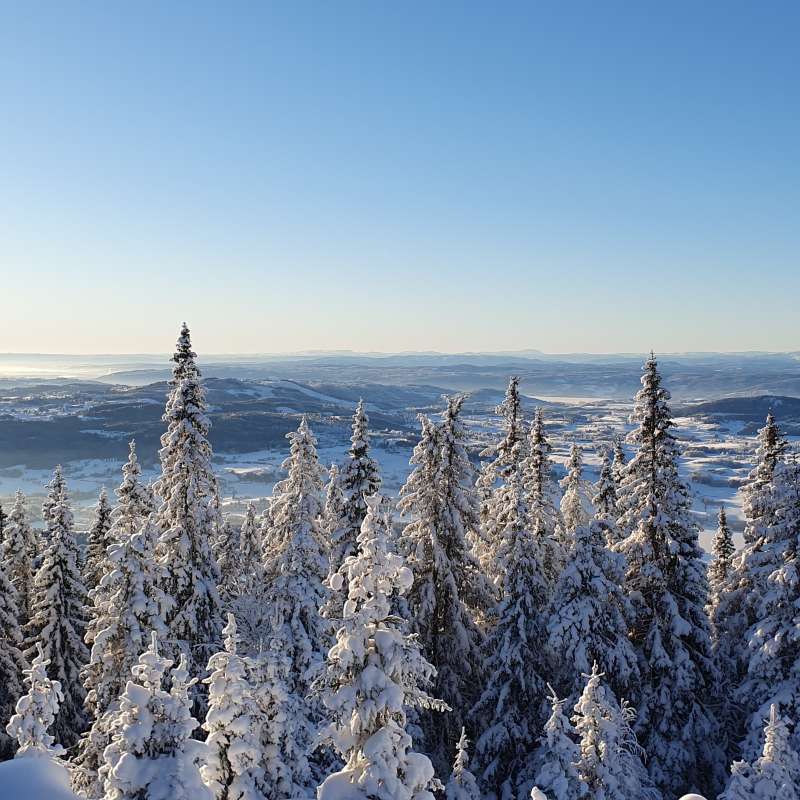
Division of Forest and Forest Resources
EU Climate Policy Implications for Land Use in Norway: Managing Trade-offs and Achieving Policy Coherence (ClimaLand)
The ClimaLand project will investigate trade-offs between policy goals, governance levels, and sector interests, and seek to identify how to design more coherent climate and land-use policies. An important objective is to investigate how conflicting policy goals can be handled and various considerations and land-use interests balanced.
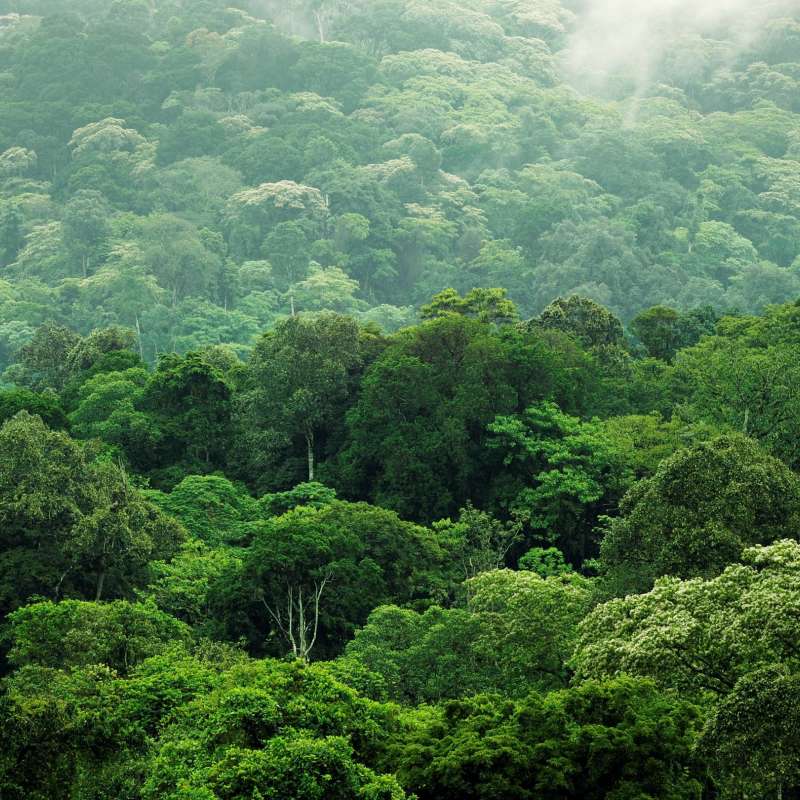
Division of Forest and Forest Resources
Optimizing Carbon, Soil Health and Yield in Coffee-Forest Systems as a Climate-Smart Land Management in Ethiopia (CoffeeLand)
CoffeeLand is an interdisciplinary research project aimed at advancing climate-smart land management in Ethiopia’s coffee-forest systems, which are critical for biodiversity, livelihoods, and global Arabica coffee genetic resources. These systems support millions of smallholder farmers but are increasingly threatened by climate change, land-use pressure, and declining productivity.