Fewer approved pesticides may increase resistance in agriculture
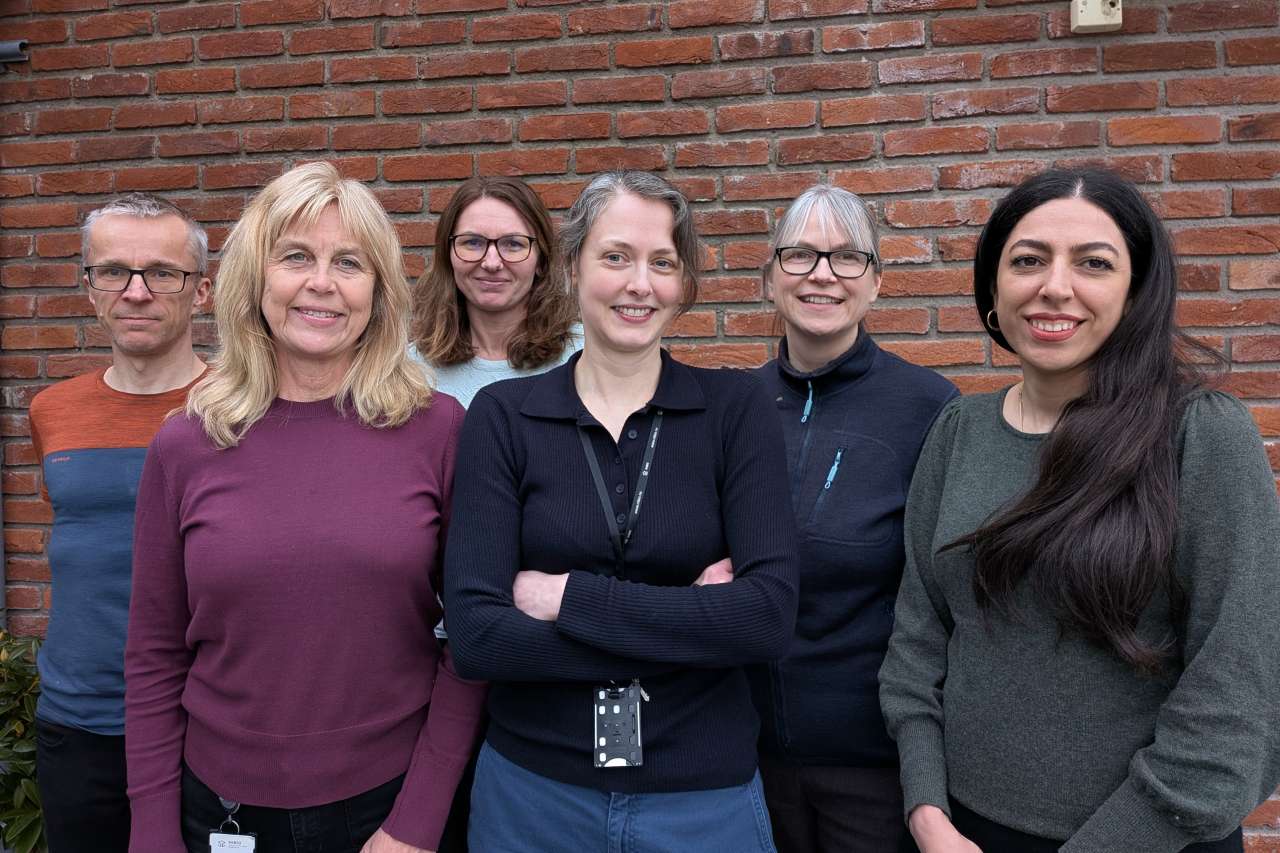
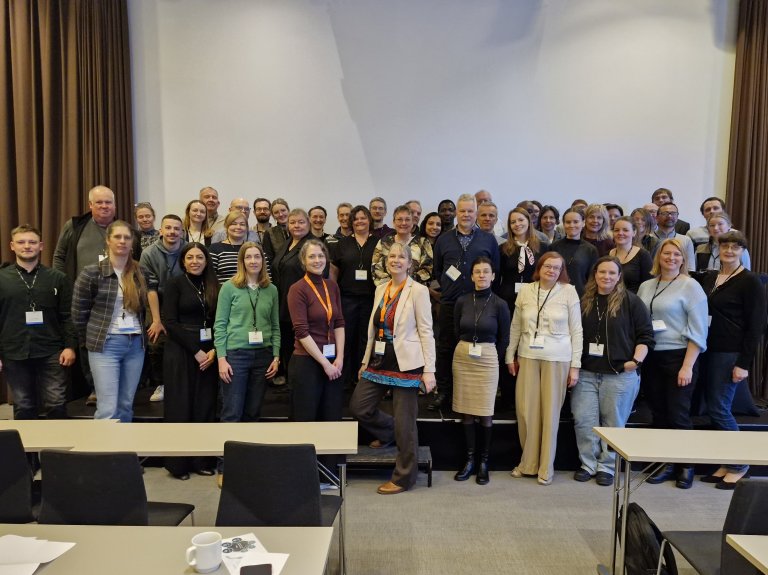
At NIBIO, several researchers work on issues related to pesticide resistance. This year, they met colleagues from across Europe at the annual NORBARAG meeting to share updated knowledge on resistance development in Europe. From left: Håvard Eikemo, Ingerd Skow Hofgaard, Wiktoria Kaczmarek-Derda, Katherine Nielsen, Andrea Ficke, and Zahra Bitarafan. Photo: Silje Kvist Simonsen, NIBIO
An increasing number of plant pests are becoming resistant to pesticides. At the same time, more pesticides are disappearing from the market, creating a challenging situation for Norwegian agriculture.
Pesticides play an important role in conventional agriculture. Without pesticides, it is estimated that agriculture in Northern Europe could experience yield losses of up to 60% due to competition and damage from weeds, diseases, and pests. It is therefore important that the products used are effective. For this reason, several research communities are concerned that harmful organisms are developing resistance to the active substances in different pesticides.
“We see that weeds, fungi, and insects are developing resistance to pesticides,” explains Katherine Nielsen, a researcher at NIBIO.
“This is a challenge we see everywhere pesticides are used, both in Norway and in the rest of the world.”
Strong European cooperation
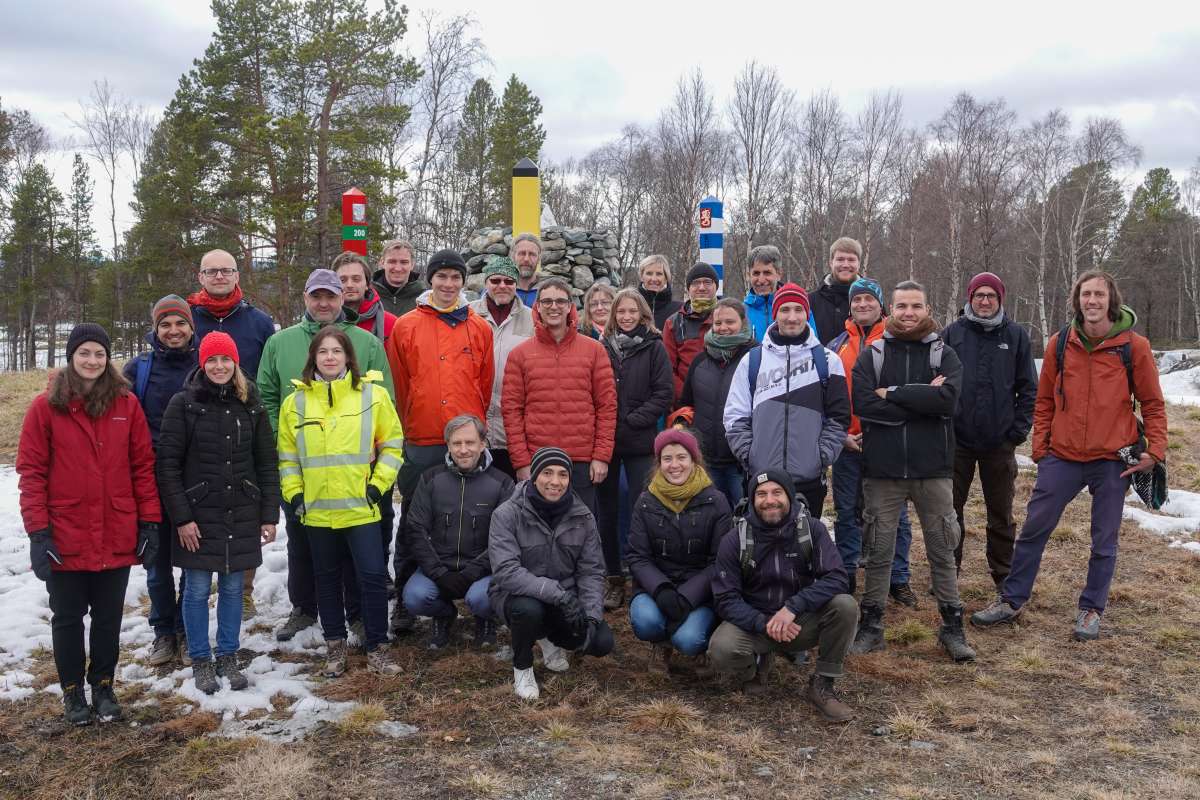
Nielsen is part of the Nordic-Baltic collaboration NORBARAG, which brings together researchers working with pesticides and pesticide resistance. Recently, participants from the member countries met to discuss the resistance challenges emerging in their respective countries.
Today, the development of resistance is a growing problem in Europe. When resistant pests are discovered, the findings are registered in a database. There are strict documentation requirements for these registrations, and therefore it often takes time from when resistance is detected until it is recorded in the database. As a result, the database does not always provide a sufficiently up-to-date overview of newly emerging resistance.
“This is what makes the NORBARAG collaboration especially important,” Nielsen points out.
“At these annual meetings we update each other on new developments in resistance in the member countries, so that we have up-to-date knowledge.”
“We need this knowledge to make good decisions to keep resistance levels low and preserve the effectiveness of the pesticides we are allowed to use. An overview of which organisms are resistant to different active substances allows us to choose the products that work best. Ideally, we can select pesticides that are effective against pests that may be resistant to other types of products. In this way we can limit the development of resistance.”
“In addition, a good overview of the situation in Europe gives us insight into what challenges we may face in Norway in the future, so that we can be prepared,” Nielsen continues.
.jpg)
Want to map herbicide resistance in weeds
Zahra Bitarafan is a weed researcher at NIBIO and wants to address this issue.
“This year we are starting a two-year project that will form the basis for a national plan for monitoring herbicide resistance,” she says.
Herbicides are the most widely used type of pesticide in Norway and remain the most important tool Norwegian farmers have for controlling weeds.
“There is already resistance to herbicides in some important weed species in Norway, but we need a better overview of where resistance has developed,” Bitarafan explains.
“An updated overview of resistance will be important both for managing the resistance that already exists and for preventing further resistance development. This is crucial for productivity in crop production and for ensuring an effective and sustainable use of pesticides.”
Phase-out of products creates major challenges
To prevent pests from developing resistance, it is useful to use different types of pesticides with active substances from different chemical groups. Products with different active substances work in different ways. An organism that is resistant to one active substance from a chemical group may therefore still be vulnerable to a substance from another group.
This is why researchers are concerned that fewer products are available to farmers.
“In recent years we have seen a trend where more products are losing their approval. This increases the risk that pests will develop resistance to the few products that remain. In the long term, this could mean that we are left with no effective products against certain pests and weeds,” Nielsen explains.
She notes that the process of developing and bringing new products to market can take up to 12–15 years and is extremely costly. Over the past decade, several products have lost their approval without being replaced by new chemical alternatives.
The lack of effective products is especially noticeable when it comes to insecticides.
“There are almost no insecticides left on the market. For some farmers, including fruit growers, this can create major problems. Some farmers are left without good tools to manage difficult insect pests.”
Looking ahead, more products are expected to lose approval.
“The phase-out of pesticides will have major consequences for Norwegian agriculture,” Nielsen concludes.
Contacts
Katherine A. G. Nielsen
Research Scientist
-
Division of Biotechnology and Plant Health
(+47) 993 75 556 katherine.a.g.nielsen@nibio.no Office Location: Ås H7
How resistance develops
Within a population of pests there is natural variation, and some individuals may have greater resistance to pesticides than others. When a pesticide is used, it is therefore not certain that all individuals will die. Those that survive the treatment can reproduce and pass their resistance on to the next generation. Each time the same pesticide—or one that works in the same way—is used, resistant individuals will survive and multiply. Over time, more individuals in the population become resistant, and the pesticide may eventually lose its effectiveness.
NORBARAG
NORBARAG (Nordic Baltic Resistance Action Group) is a Nordic-Baltic collaboration focused on research on pesticide resistance and evaluation of pesticide effectiveness. The network includes representatives from research institutes in Denmark, Estonia, Finland, Latvia, Lithuania, Norway, and Sweden, as well as from the pesticide industry operating in the Nordic-Baltic region.
The collaboration aims to:
- share knowledge about pesticide resistance
- verify and register resistance in the region
- coordinate methods and research needs
- strengthen collaboration and increase awareness of resistance
Contacts
Katherine A. G. Nielsen
Research Scientist
-
Division of Biotechnology and Plant Health
(+47) 993 75 556 katherine.a.g.nielsen@nibio.no Office Location: Ås H7