
Employees
News
_cropped.jpg?quality=60)

Publications
Authors
Ararsa Derese SebokaAbstract
Energy systems in many low- and middle-income regions remained dominated by traditional biomass and fossil fuels, with significant implications for environmental sustainability, public health, and resource security. In Sub-Saharan Africa, and particularly in Ethiopia, biomass including firewood, charcoal, agricultural residues, and animal dung accounts for approximately 87% of total final energy consumption. Continued reliance on fuelwood and charcoal, combined with inefficient combustion technologies and unmanaged organic-waste disposal, contributed to deforestation, land degradation, greenhouse gas (GHG) emissions, and indoor air pollution. Methane emissions from open dumping of biodegradable waste further exacerbated climate impacts. Concurrently, population growth and rapid urbanization increased municipal solid-waste generation, of which a significant proportion comprises biodegradable and lignocellulosic fractions that remain largely untreated and underutilized. These converging pressures emphasized the need for integrated circular approaches that link waste management with renewable energy production, enabling recovery of value from lignocellulosic biomass while reducing environmental burdens. Lignocellulosic biomass represented a substantial yet underexploited renewable resource in Ethiopia. It is originating from agricultural residues, agro-industrial by-products, and service sector streams such as hotels and university campuses; these materials consist primarily of cellulose, hemicellulose, and lignin which are suitable for conversion into renewable energy carriers. However, most residues were disposed of through open dumping and informal burning, leading to uncontrolled emissions of methane and other greenhouse gases, air pollutants, localized soil and water contamination, and loss of recoverable energy. Effective valorization therefore required not only appropriate conversion technologies but also system-level integration that aligned feedstock characteristics, real-world energy demand, and environmental performance within a circular bioresource framework. The main objective of this PhD thesis was to evaluate the integrated circular valorization of lignocellulosic biomass into biogas and bio-briquettes and to assess the associated environmental implications in Southern Ethiopia. The research focused on hotels and university campuses as decentralized points where concentrated organic streams coexisted with continuous and predictable energy demand. By integrating national resource assessment, site-level energy and waste data, laboratory-scale solid-state anaerobic digestion (SS-AD) experimentation, and bio-briquette optimization, the thesis established a multi-scale framework for evaluating integrated circular valorization of lignocellulosic biomass in Southern Ethiopia.
Authors
Belachew Gizachew ZelekeAbstract
Tropical forests, despite their critical environmental and socio-economic roles, remain highly vulnerable to deforestation, forest degradation, and climate-related disturbances. There is a growing demand for robust and transparent forest monitoring systems, particularly under REDD+, the Paris Agreement’s Enhanced Transparency Framework (ETF), and emerging climate-finance mechanisms. Conventional approaches based on field inventories and traditional remote sensing are often constrained by limited or uneven field data, persistent cloud cover, complex forest conditions, and limited institutional and technical capacity. This review examines how artificial intelligence (AI) and machine learning (ML) are being integrated into remote sensing–based tropical forest monitoring to address these structural constraints. Using a semi-systematic synthesis of peer-reviewed studies, complemented by operational platforms and grey literature, the review assesses AI/ML approaches, remote sensing datasets, and applications relevant to national and large-scale monitoring. Evidence is synthesized across five analytical dimensions: AI/ML model families and workflows, multi-sensor datasets and training resources, operational monitoring platforms, application domains (including deforestation, degradation, and biomass/carbon estimation), and cross-cutting technical, institutional, and governance barriers. The review finds that AI/ML-enabled remote sensing, particularly those combining optical, radar, and LiDAR time series within cloud-based platforms, has substantially improved the automation, scalability, and speed of tropical forest monitoring. However, effective and equitable adoption remains constrained by limitations in training and validation data, dependence on proprietary platforms and data, uneven technical capacity, and unresolved governance and ethical challenges. Emerging solutions, including open and representative training datasets, platform-agnostic processing infrastructures, long-term capacity building, and inclusive data-governance frameworks, are identified as critical enablers of credible and nationally owned AI/ML-enabled forest-monitoring systems. The review highlights that AI/ML can play a transformative role in supporting climate mitigation, biodiversity conservation, and informed decision-making. This potential, however, depends on transparent data governance arrangements, long-term capacity building, and platform-agnostic infrastructures that support national ownership.
Authors
Niklas Jan WickanderAbstract
Ethiopia suffers from severe soil degradation resulting from poor agricultural management practices, deforestation, cultivation on slopes, and heavy, erratic rainfall patterns. This degradation places substantial pressure on smallholder farmers through the loss of topsoil, which reduces soil fertility and diminishes the area of arable land available for cultivation. Smallholder farmers typically practice mixed crop-livestock system, in which animals are often kept on small plots of land during the dry season and fed crop residues, while being allowed to graze on communal lands during the rainy season. Livestock is important to Ethiopian livelihoods, with a large proportion of the population dependent on it. However, the high density of animals, combined with low forage production, exacerbates soil degradation through overgrazing on communal land and increased reliance on crop residues for feed, thereby reducing the return of organic matter to the soils. To address these issues, inclusion of perennial forage mixtures as leys has been proposed as a strategy to both improve livestock feed production and restore degraded soils while preventing further degradation. Plant mixtures, particularly of grasses and legumes, have well-documented benefits to enhance soil organic C (SOC) and nutrient content, reduce the risk of erosion by stabilizing soil structure, and increase forage yields and feed quality. Improved soil nutrient status due to plant inputs also stimulates soil microbial communities, increasing microbial activity and exoenzyme synthesis. This has positive ramifications for soil nutrient cycling and may help remediate degraded Ethiopian soils in low-input agricultural systems. However, the effects of different plant species mixtures in soils with varying chemical and mineralogical composition remain unclear and require further investigations to identify optimal plant mixtures for different soil types. This thesis aims to elucidate the effects of four forage plant species on selected soil parameters in degraded soils from two distinct Ethiopian regions, with a particular focus on soil microbial functions. The thesis comprises three papers, each with focus on different aspects of plant-soil-plant feedbacks in various settings: (I) the effects of plant diversity and biomass on microbial activity and nutrient cycling in a field experiment, (II) the effects of specific plant species inputs on soil microbial nutrient stoichiometry and nutrient cycling under controlled greenhouse conditions, (III) microbial carbon use efficiency (mCUE) in weathered soils under cultivation of perennial forage species in a greenhouse experiment. The thesis is based on three separate experiments: a field experiment in the Amhara and Sidama regions of Ethiopia, and both large- and small-scale factorial experiments in greenhouse using soils sampled from these regions. Two grasses (Urochloa hybrid cv. Cayman and Megathyrsus maximus) and two legumes (Desmodium intortum and Stylosanthes guianensis) were grown in the experiments described in Papers I and II, whereas only U. cv. Cayman and D. intortum were grown in the experiment described in Paper III. Soil chemical and physical characteristics were determined prior to the experimentation for all soils. Microbial nutrient status and its responses to plant input were assessed via analysis of exoenzyme activity (EEA), while specific microbial functions such as nitrification and denitrification were also measured. The plant effect on microbial C-turnover and growth was determined by using the 18O-H2O stable isotope probing (SIP) method, determining mCUE and microbial growth rate. Overall, plant inputs had generally positive effects on soil microbial functions, although responses varied considerably depending on initial soil properties. The strongest effects were typically observed in the more fertile Sidama soils, compared to the less fertile Amhara soils. The magnitude and nature of plant input effects also differed across the three studies. Plant species diversity and biomass had minor effects on soil microbial functions, while U. cv Cayman showed some positive effects on belowground functions in Hawassa soil (Paper I). Legumes, particularly S. guianensis, enhanced EEA which contributed positively to the soil microbial nutrient cycle (Paper II). Plant inputs affected mCUE only in the Sidama soils, with a positive effect of increased plant biomass on mCUE and a negative effect of the U. cv. Cayman × D. intortum mixture on mCUE (Paper III). In summary, the implementation of perennial forage mixtures had positive effects on soil microbial nutrient cycling, with potential long-term effects for soil health. However, these effects were soil-specific, with stronger responses and higher microbial activity in the more fertile, phosphorus (P) rich soils of the Sidama region. The low responsiveness of soil microbes to plant inputs in the Amhara region may be attributed to inherently low P availability. Alleviating P limitation may therefore be necessary before realizing the beneficial effects of perennial forage mixtures in P-limited soils. In addition, site-specific selection of plant species mixtures that can successfully establish and co-exist is recommended to achieve optimal plant performance and effective soil remediation.
Projects
Division of Forest and Forest Resources
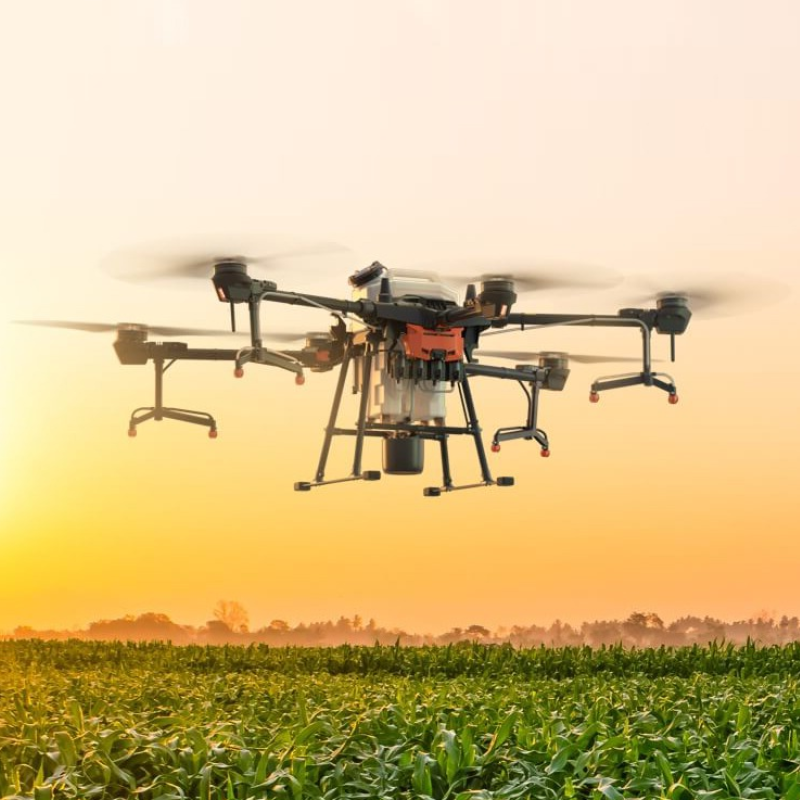
SPADE: Multi-purpose physical-cyber agri-forest drones ecosystem for governance and environmental observation
The strategic objective of SPADE project is to develop an intelligent ecosystem to address the multiple purposes concept in the light of deploying unmanned aerial vehicles (UAVs alias drones) to promote sustainable digital services for the benefit of a large scope of end users in sectors of crop production, forestry, and livestock. This includes individual UAV usability, UAV type applicability (e.g., swarm, collaborative, autonomous, tethered), UAV governance models availability and UAV-generated data trustworthiness.
Division of Forest and Forest Resources
Biofuel4Kenya: Improving Framework Conditions and Skills for Private Sector Development in Biofuel Value Chain in Kenya (Biofuel4Kenya)
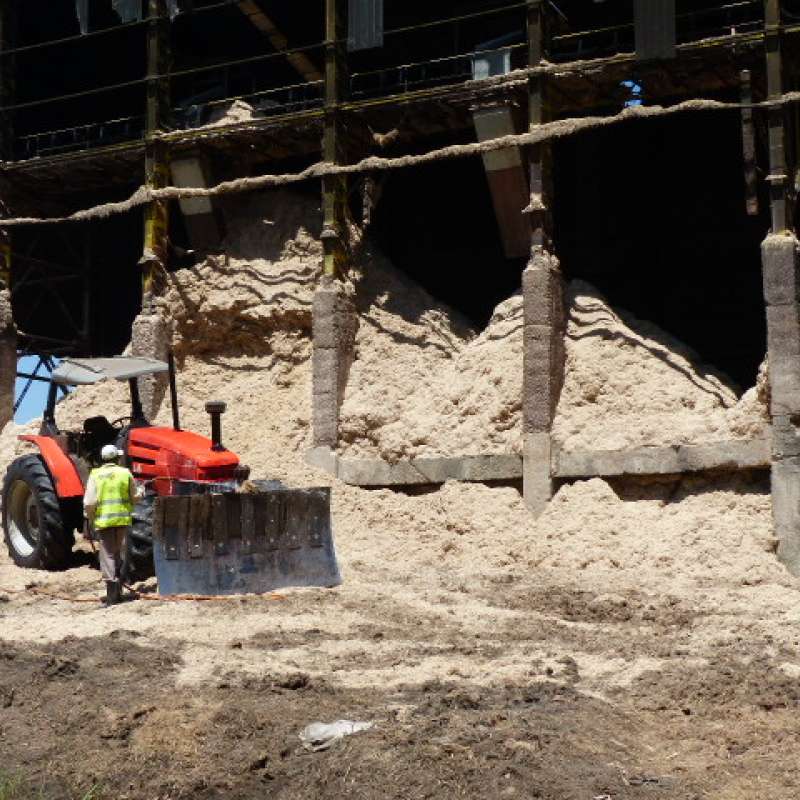
The main objective of the project is to develop a biofuel briquettes production and supply value chain from waste bagasse to market. Biofuel4Kenya will improve framework conditions for private sector development in the biofuel value chain, in order to boost commercial production of carbonized biomass briquettes from agro-industrial residues in western Kenya.