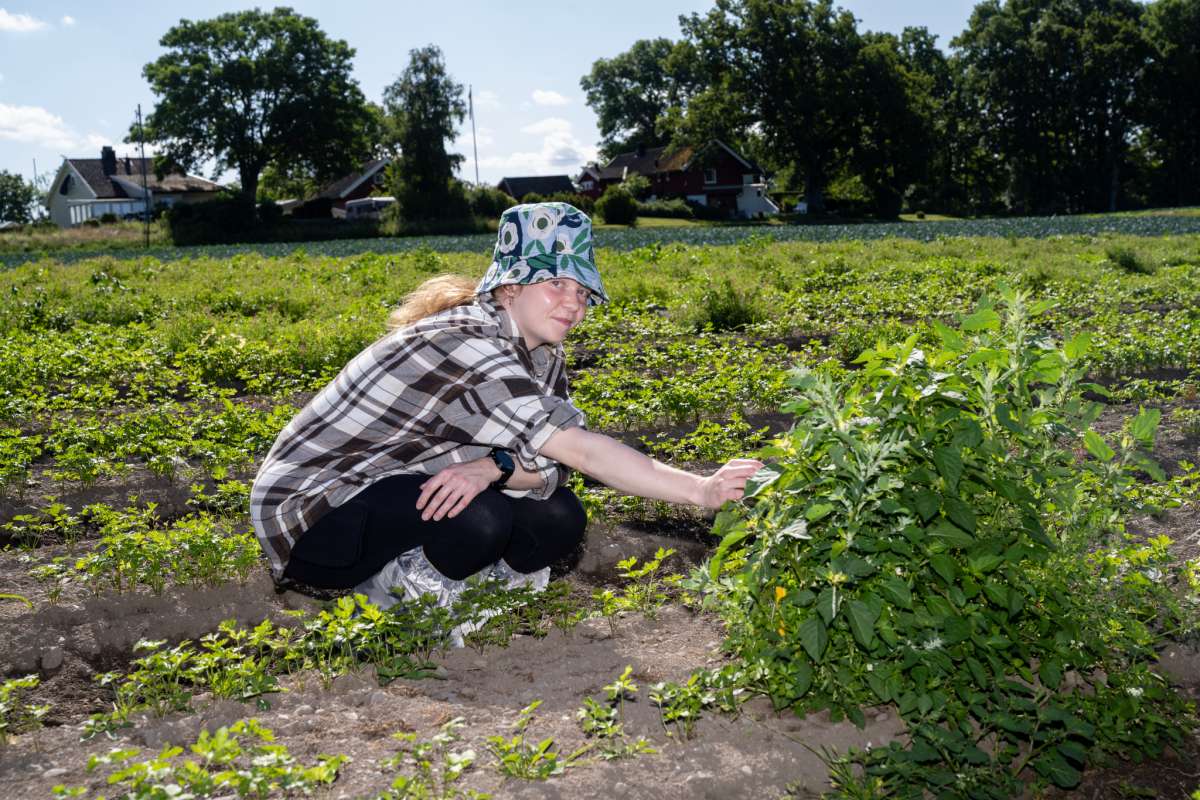
Bringing the Entire Food System to the Same Table
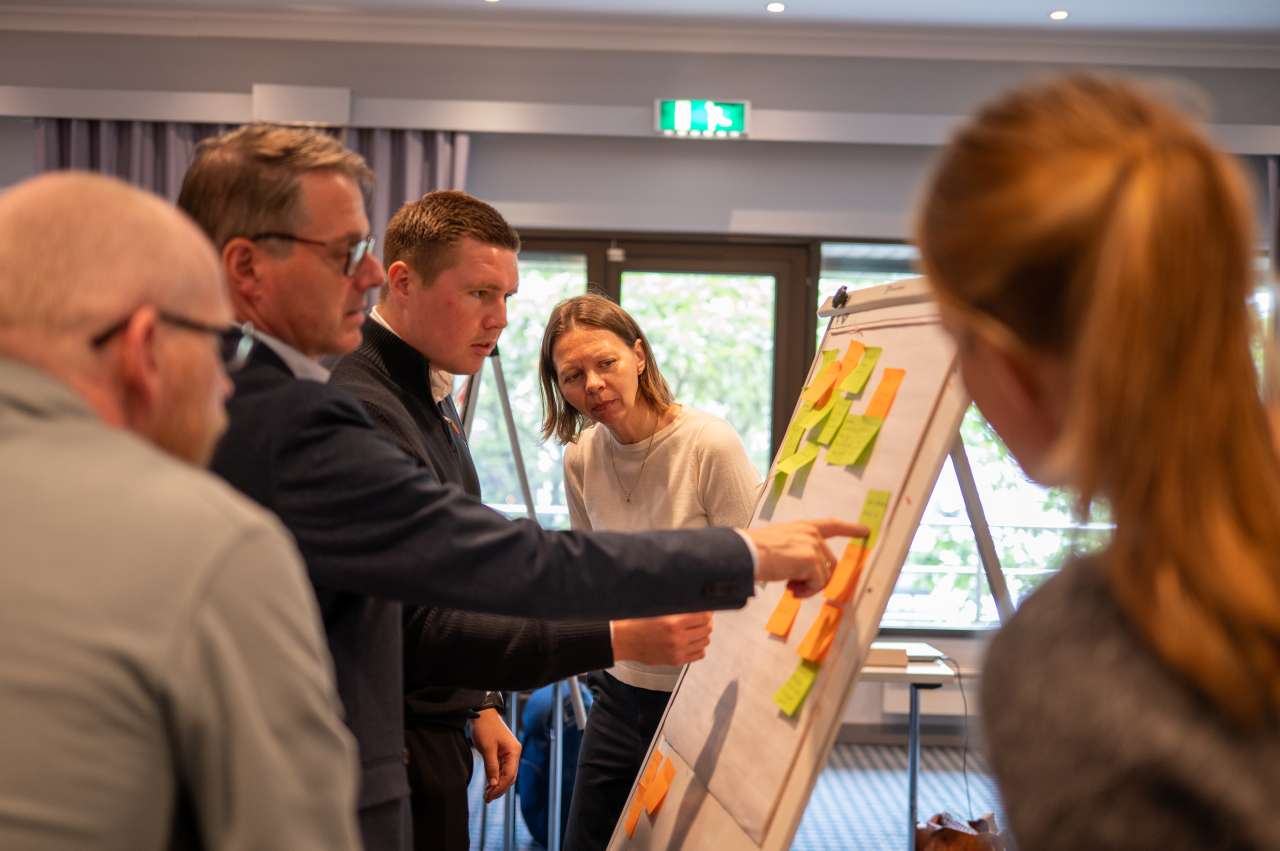
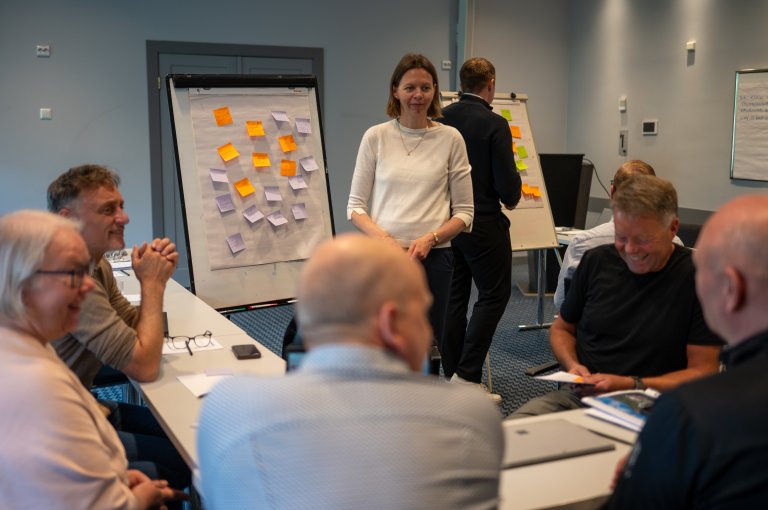
A living laboratory where producers, public authorities, consumers and researchers work together to develop knowledge and solutions. Photo: Mari Vold Hansen/NIBIO
What happens when fishers, farmers, businesses, authorities and researchers sit down together to discuss the future food production? In the FULCRUM project, stakeholders from across Northern Norway's food system come together to share experiences, identify challenges and explore solutions.
It is a rainy June day in Bodø. The temperature is 12 degrees Celsius, and heavy clouds hang over the city like a grey blanket. A typical Northern Norwegian summer day.
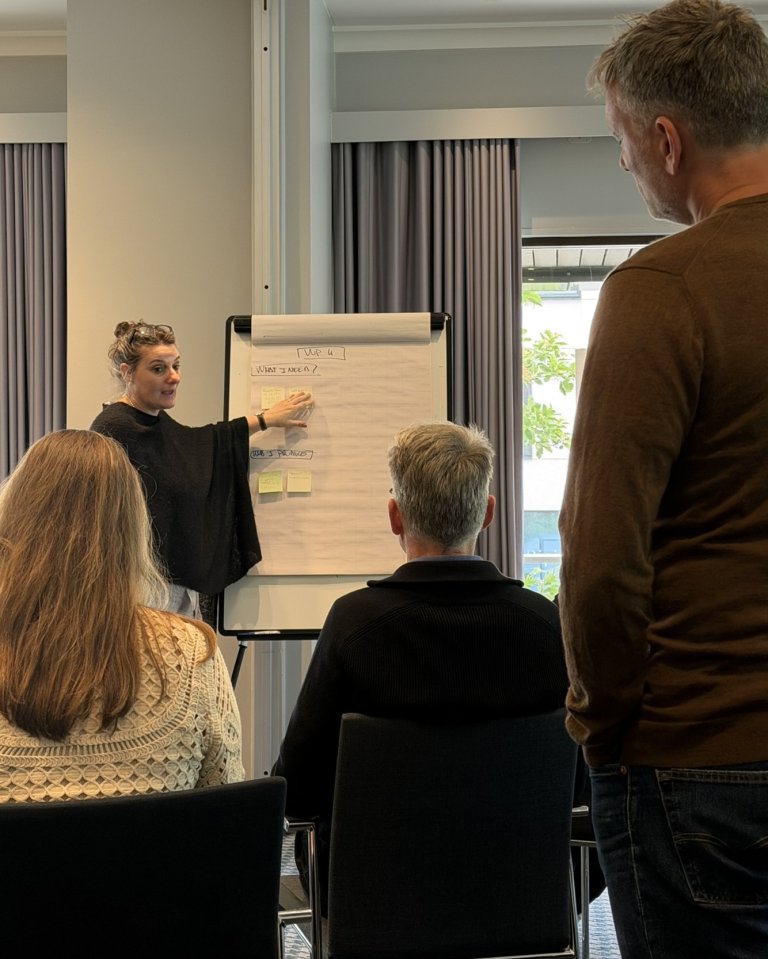
Inside the meeting room, however, the atmosphere is full of colour, energy and engagement. Green, purple and orange post-it notes cover large sheets of paper. Arrows are being drawn. Some participants nod in agreement. Others challenge one another in lively discussions.
A Living Laboratory
This is a Living Lab: a living laboratory where producers, public authorities, consumers and researchers work together to develop knowledge and solutions.
The gathering marked the first workshop in FULCRUM, a new EU-funded project that aims to investigate how food systems across Europe can become more sustainable and make better use of the resources already available.
"Through Living Labs, researchers and stakeholders work together to gain a holistic understanding of the region's food system and identify ways to make it more circular and resilient," says Giovanna Ottaviani Aalmo. She is a researcher at NIBIO and coordinator of the project.
"By making better use of local resources and by-products, we can reduce dependence on imported raw materials and contribute to a more resilient and self-sufficient food system."
Marianne Vileid Uleberg is a senior adviser at NIBIO and coordinates the Norwegian Living Lab, which focuses on the food system of Northern Norway.
"The participants in the workshop bring many different perspectives, but they all have a connection to the region and the food system we are working with. They are the ones who know the challenges we are trying to address best," says Uleberg.
As a native of Northern Norway, Uleberg is particularly concerned with how an increasingly unpredictable world is strengthening the need for improved food security in the region.
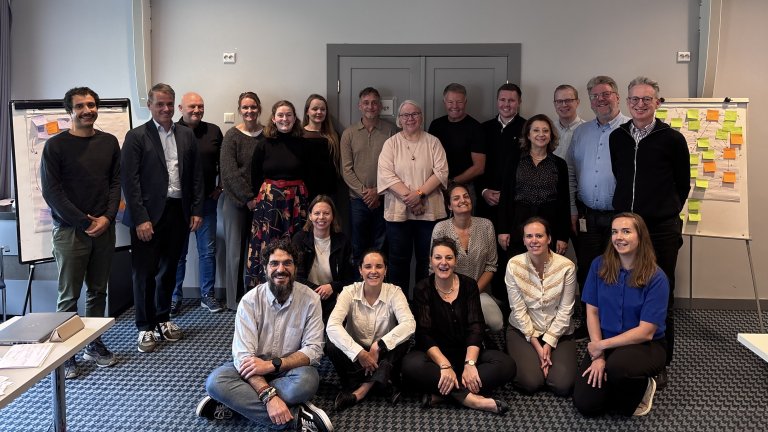
Growing Threats to Food Security in Norway
The food security in Norway is being challenged from several directions. Unpredictable global leaders and rising international tensions make dependence on imports increasingly vulnerable. At the same time, more frequent extreme weather events caused by climate change are affecting both food production and transportation.
In Northern Norway, these challenges are further intensified by long distances, a demanding climate and limited agricultural resources.
The food system in Northern Norway includes everything from producers and processing companies to transport operators, authorities, retailers and consumers. In short, it encompasses everyone involved in the food value chain.
"The stakeholders are mutually dependent on one another, which means these challenges cannot be solved by any single sector alone. That is precisely why, in FULCRUM, we have brought representatives from across the food system to the same table," Ottaviani Aalmo emphasizes.
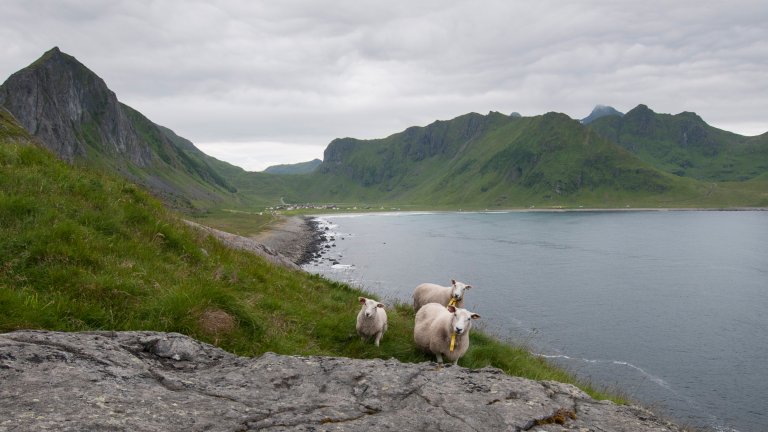
The Food System at the Round Table
The FULCRUM project consists of five Living Labs across Europe.
"The goal is for new solutions to be grounded in the real needs and experiences of the people who are part of the food system," explains Ottaviani Aalmo.
A particular focus in Northern Norway is to involve small businesses and local stakeholders. They often possess valuable knowledge about both the challenges and opportunities found in the region.
"We see considerable potential for making better use of available resources. This could, for example, involve utilizing by-products from fisheries, aquaculture or agriculture that are currently discarded," says Uleberg.
Such resources can be given a new life as for example fertilizer, animal feed or feedstock for biogas production.
"In this way, we can reduce waste and create value from resources that are currently regarded as waste. More resources are brought back into the value chain, making the food system more circular," Ottaviani Aalmo elaborates.
Shared Challenges Across Sectors
The workshop in Bodø highlighted the high abundance of resources in Northern Norway, but that there are barriers that make them difficult to utilize.
"Long distances between producers and markets, together with vulnerable transport routes, make it challenging to increase local food production, particularly in the face of more extreme weather events," summarizes Ottaviani Aalmo.
"In addition, there is a shortage of capital, labour and expertise throughout the region. Current regulations are not always adapted to new ways of utilizing by-products, such as fish offal."
Participants generated several ideas for how underutilized resources such as seaweed, kelp, sea urchins and fish innards could contribute to new value creation while also benefiting the environment and local communities.
"This illustrates the value of the Living Lab approach. When the entire food system comes together, it becomes easier to identify where the challenges and opportunities lie and to understand how different solutions can create positive ripple effects throughout the system," says Ottaviani Aalmo.
The Discussions Continue
Over the next three years, the FULCRUM project will facilitate further discussions about the food system of Northern Norway. The next workshop will take place in Southern Troms in November. Uleberg particularly hopes to attract more representatives from agriculture, fisheries and public administration in the region.
The colourful notes covering the workshop room in Bodø did not represent finished answers. They represented questions, ideas and challenges that participants will continue to work on in the years ahead. The goal is for these conversations to eventually lead to concrete solutions for a more sustainable food system in Northern Norway.
Contacts
Giovanna Ottaviani Aalmo
Research Scientist
-
Division of Food Production and Society
(+47) 980 30 422 giovanna.ottaviani.aalmo@nibio.no Office Location: Ås O43
Would You Like to Join the Next Workshop?
The next workshop in FULCRUM will be held in Southern Troms in late November. We welcome stakeholders from across Northern Norway's food system, particularly representatives from agriculture, fisheries/aquaculture and public administration.
For more information and registration, please contact Marianne Vileid Uleberg at: marianne.uleberg@nibio.no
Food System Labs: Policy Coherence and Empowerment to Transform Food Systems within a Just Circular Bioeconomy (FULCRUM)
Duration: 2026–2029
Project website: https://www.nibio.no/en/projects/fulcrum
Funding: Funded by the European Union's Horizon Europe research and innovation programme through FutureFoodS
Partners: Comillas Pontifical University (Spain), Humboldt University of Berlin (Germany), The Transnational Institute (Netherlands), University of Palermo (Italy), RISE Research Institutes of Sweden (Sweden), Flanders Research Institute for Agriculture, Fisheries and Food (Belgium), KU Leuven (Belgium), Wageningen University & Research (Netherlands)
Living Labs and Theory of Change
FULCRUM consists of five Living Labs in Belgium, Germany, Italy, the Netherlands and Norway. Together, they represent a range of terrestrial and aquatic food systems across Europe, each with different governance structures and challenges related to the circular bioeconomy.
Contacts
Giovanna Ottaviani Aalmo
Research Scientist
-
Division of Food Production and Society
(+47) 980 30 422 giovanna.ottaviani.aalmo@nibio.no Office Location: Ås O43